AMCOMCAP.COM BLOG
WORDS OF WISDOM FOR ENTREPRENEURS & BUSINESS OWNERS

Honest Answers from American Commercial Capital
Most advice about starting a B2B business with no money skips the hard part. It tells you to “bootstrap,” “hustle,” and “find investors.” Two of those are useful. The third one costs you the thing you started the business to get in the first place.
Here’s the honest answer: you can start a B2B business with no money — or close to it — and keep 100% of it. What you can’t do is start a business with no money, no skill, no customers, and no patience. Something has to be real. Usually it’s your ability to do work someone will pay for.
This article is about how to get from that ability to a functioning company without selling off pieces of it along the way — and about the specific wall almost every new B2B business hits around month four, when the orders start coming in faster than the cash does.
New business owners give away equity casually because at the beginning it feels like nothing. Twenty percent of a company doing zero dollars is zero dollars.
Run it forward. Say you give a friend 20% for $25,000 of startup money. Five years later the business is throwing off $400,000 a year in owner earnings. That $25,000 now costs you $80,000 every single year, forever, plus 20% of the business if you ever sell it. And your partner may or may not still be answering the phone.
Compare that to money that costs you a fee and then goes away. A vendor extending you net-30 terms costs you nothing. A customer deposit costs you nothing. A factoring fee on an invoice costs you a defined percentage, one time, on that invoice — and then it’s over. None of them show up at the closing table in fifteen years.
Equity is the most expensive money on earth. It should be the last money you take, not the first.
The reason so many people think they need investors is that they’ve picked a business that needs a building, a fleet, and inventory. That’s a capital business. It’s not the only kind.
The businesses that start on almost nothing share a few traits:
Here in Texas, we see this pattern constantly: a shop foreman goes out on his own with a truck and a customer list. A staffing recruiter takes two accounts and starts placing. A dispatcher with fifteen years at a carrier gets his own authority. None of them raised a dime of outside capital. Every one of them owns 100%.
Before you ever talk to an investor, exhaust these.
1. Your own labor. Sweat equity is real capital. Every hour you spend doing your own books, your own sales calls, and your own invoicing is money you didn’t have to raise. Keep the day job as long as you can stand it. There is no shame in building a business on nights and weekends until it can carry you.
2. Your customers. More on this below, but customer money is the best money in business. It’s free, it doesn’t dilute you, and it validates that you have a real business.
3. Your vendors. Terms from suppliers are an interest-free loan. Most new owners never ask.
4. Your receivables. Once you’ve invoiced a creditworthy commercial customer, you own an asset. That asset can be converted to cash today instead of in 45 days. This is where invoice factoring comes in, and it’s the piece most people don’t know about.
| Funding source | What it costs you | What it requires | Best for |
|---|---|---|---|
| Your own labor | Time, not ownership | Willingness to do your own books, sales, and invoicing | Month one to first revenue |
| Customer deposits | Nothing | Asking, and getting it in the contract before you start | Project and fabrication work |
| Vendor terms (net-30) | Nothing if paid on time | Credit application, trade references, paying on the same day every month | Recurring material purchases |
| Invoice factoring | A defined fee, one time, per invoice | A completed job and an invoice to a creditworthy business customer | Funding growth after the order lands |
| Equity investor | A permanent share of all future profits and any sale | Giving up part of the company forever | Last resort |
Every dollar a customer pays you before you deliver is a dollar you didn’t have to borrow.
Suppliers extend credit to new companies more often than people expect, because they want the account.
Start on COD, pay on the nose for 60–90 days, then ask for a credit application and net-30. Give them trade references. Introduce yourself to the credit manager, not just the salesman. Once you have terms with two or three vendors, that’s a revolving line of credit you never had to sign a note for.
The order matters: get terms from vendors before you need them. Credit is easiest to get when you don’t need it, which is exactly why most business owners get it too late. And once you have terms, protect them — paying suppliers on the same day every month is worth more to your business than most owners realize.
Here’s the part nobody warns you about.
You did it right. You started lean, you kept the overhead down, you kept 100%. Word gets around, and now a real customer — a company with a name you recognize — hands you an order four times bigger than anything you’ve done.
And you can’t take it.
Not because you can’t do the work. Because you have to buy the material, make the payroll, pay the subs, and cover the fuel now, and that customer pays in 45 to 60 days. The bigger the order, the bigger the hole. Growth eats cash faster than losses do, and it’s a fact that has killed a lot of good companies that were profitable on paper the whole way down.
Your options at that moment are usually:
Option four is the one that doesn’t cost you ownership.
Invoice factoring is not a loan. You’re selling an asset you already own — the invoice — at a discount, for cash today. There’s no note, no equity, and nothing on your balance sheet that says you borrowed money.
The mechanics are simple:
The critical detail for a new business: the credit that matters is your customer’s, not yours. A two-year-old machine shop with no bank borrowing history can still factor invoices billed to a large, financially sound customer. That’s backwards from how a bank looks at you, and it’s exactly why factoring works for young companies.
A staffing company. You place six people at $28 an hour, billed weekly at roughly $6,700. Your payroll on those six, with burden, is about $4,800 — and it’s due Friday. Your customer pays in 45 days. To reach that first check you’d need seven weeks of payroll funded out of pocket, well over $30,000, before a dollar comes in.
With factoring, you submit Friday’s invoice and receive roughly $5,400 against it. Payroll is covered. The remainder comes back to you when the customer pays. Now the constraint on how many people you can place is how many you can recruit — not how much cash is in your operating account.
A machine shop or fabricator. You land a $40,000 order with $16,000 in material. Your supplier wants payment in 30 days; your customer pays in 60. Factor the invoice on the prior job and pay the steel bill on time, which protects the vendor relationship you spent a year building. Do that a few times and the supplier raises your credit limit — which reduces how much you need to factor going forward.
Freight. You hauled the load, you invoiced the broker, and fuel and the driver won’t wait 30 days. This is the most common use of factoring in the country for exactly that reason.
The pattern is the same in every case: the money funds work you have already sold, to a customer who has already agreed to pay. It’s the cheapest kind of financing to justify, because it’s tied to revenue you can point at. And you don’t have to run everything through it — most of our clients factor selectively, using it on the accounts where the timing gap actually hurts.
We’d rather tell you this now than after you’ve called.
Used correctly, factoring is a bridge, not a destination. Plenty of our clients factor heavily through a growth phase, build a track record and a balance sheet, and graduate to bank financing. That’s a success, not a loss. And they get there owning all of it.
If you’re comparing factors, pay as much attention to the contract terms and monthly minimums as you do to the rate — that’s usually what determines whether the relationship feels like a tool or a trap. We’ve written a full walkthrough of what to look for in a factoring company, including the questions that get you a straight answer.
Once you’re running, the discipline is the same as it was on day one:
You don’t need investors to start a business. You need a customer, a skill, low overhead, and a way to cover the gap between doing the work and getting paid for it. That last one is a solvable problem — and solving it is a lot cheaper than giving away a fifth of everything you’re going to build.
Close to it, yes — but something has to be real. You need a skill someone will pay for, a customer, and low overhead. What you can’t do is start with no money, no skill, no customers, and no patience. Service businesses in IT, staffing, consulting, welding, and freight brokerage routinely start on a laptop, a phone, and a customer list.
On project work, 30–50% up front to cover materials is standard in construction, fabrication, and custom manufacturing. The key is getting it in the contract before you start — net-30 in the contract is a negotiation, net-30 after you’ve delivered is a request. Bill in progress rather than at completion, and invoice the day the work is done.
Usually, yes. The credit that matters is your customer’s, not yours. A two-year-old machine shop with no bank borrowing history can still factor invoices billed to a large, financially sound customer. That’s backwards from how a bank evaluates you, and it’s exactly why factoring works for young companies.
None. Factoring is the sale of an asset you already own — the invoice — at a discount, for cash today. There’s no note, no equity, and nothing on your balance sheet that says you borrowed money.
When you land an order you can do the work on but can’t fund. Factoring solves the gap between delivery and payment, not the gap between concept and first sale. If you qualify for a bank line of credit at a good rate, take the bank line instead — we’ll tell you that ourselves.
American Commercial Capital has provided invoice factoring to small B2B businesses across Texas since 2003. If you want to see what the numbers would look like for your company, run them through our factoring profit calculator, read through the common questions we get, or find out what applying actually involves. When you’re ready, request a free quote — there’s no obligation, and we’ll tell you honestly if factoring isn’t the right tool for your situation.
Roy Brooks, President — American Commercial Capital, LLC · Houston, Texas · (713) 227-3863


Short answer: For most small businesses with a gross margin above roughly 20%, invoice factoring pays for itself — not because the fee is small, but because the fee is a variable cost that buys sales volume. A machine shop doing $1.2 million a year at a 28% gross margin can add $600,000 in sales, absorb a 4% factoring fee, and still finish the year with roughly 80% more…
Part of our Honest Answers series — straight talk about financing a growing business.
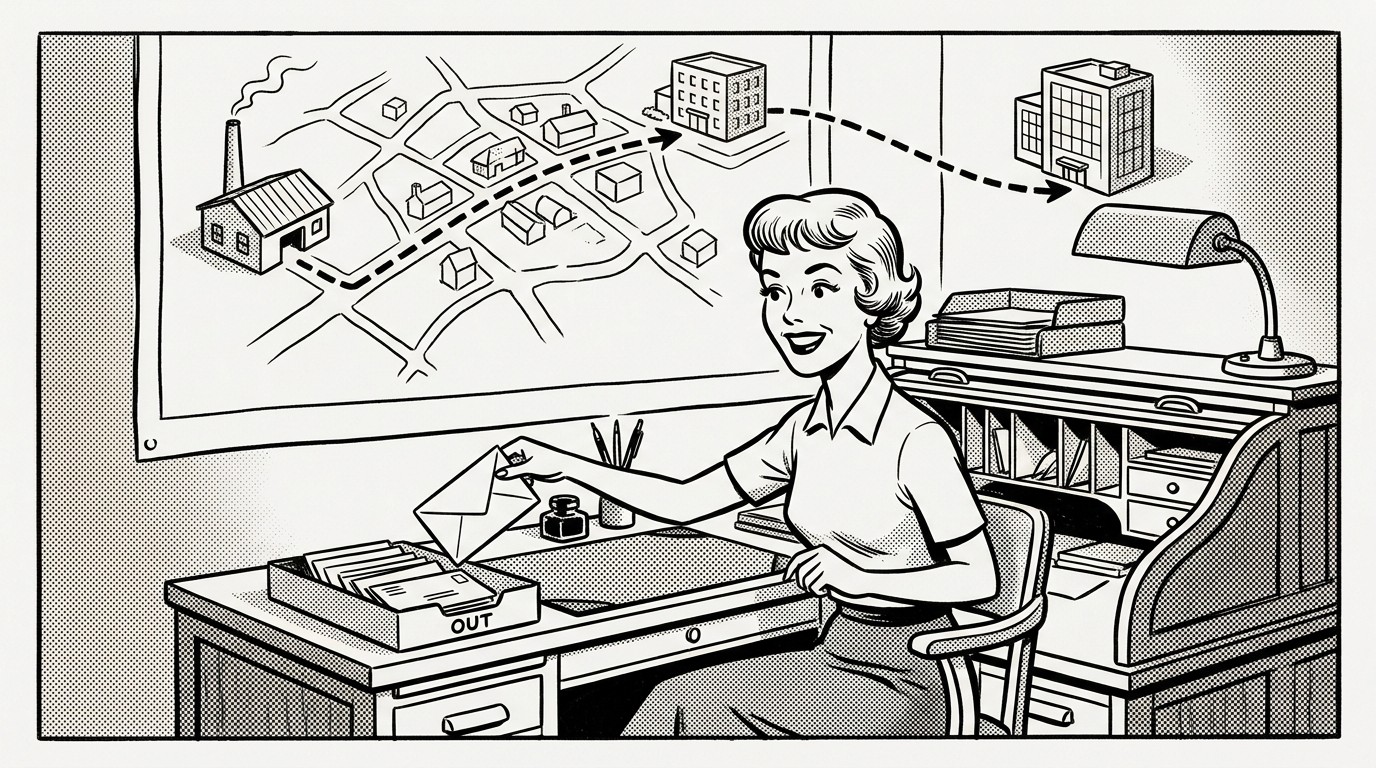
When you start factoring, we send your customer a letter. It tells them to send your payments to us instead of to you.
We call it a first-time purchase letter. The industry calls it a Notice of Assignment. Most guys call it “that letter you send my customer,” and it’s the part they…
Short answer: There is no single best factoring company in Houston. There is a best factoring company for your business, and which one it is depends on your invoice size, your industry, your customers’ credit, how much hand-holding you need, and how much you’re willing to pay for speed. This article gives you the criteria to figure that out — including the questions that will get you an honest…



HOW MUCH COULD FACTORING INCREASE PROFITS FOR YOUR BUSINESS?
CALL 713-227-3863