AMCOMCAP.COM BLOG
WORDS OF WISDOM FOR ENTREPRENEURS & BUSINESS OWNERS

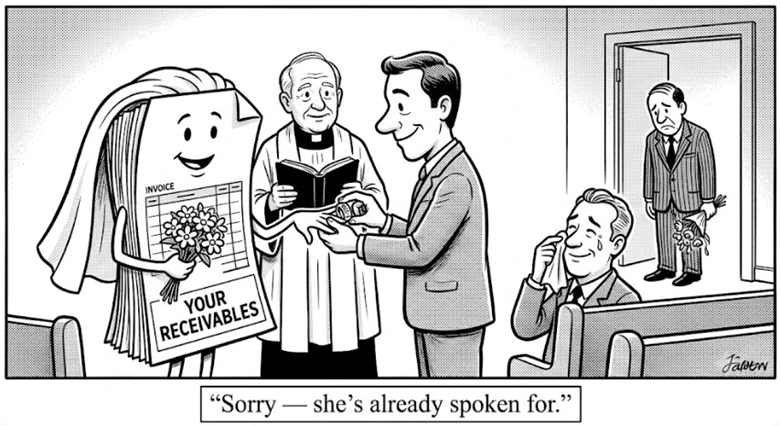
Part of our Honest Answers series — straight talk about financing a growing business.
Somewhere in the factoring agreement, usually right about where you’re feeling good about the deal, you’ll hit a line that says the factor will file a UCC-1 against your business. And for a lot of owners, that’s the moment the stomach tightens. A lien? Against me? I thought I was the one getting paid here.
I’ve been doing this since 1993, and I’ve watched that exact reaction cross more faces than I can count. So let me say it up front, plainly, the way I’d want it said to me: a UCC-1 filing is routine, it’s not a mark against you, and every legitimate factoring company on earth files one. If a “factor” ever tells you they won’t, that’s the thing you should worry about — not the filing itself.
Here’s what it actually is and why it has to be there.
UCC stands for the Uniform Commercial Code — the set of rules that govern commercial transactions in every state. A UCC-1 Financing Statement is just a short notice form filed with your Secretary of State that says, in effect: this company has a claim on this specific asset.
It has three plain parts:
That’s the whole thing. It’s a public record that lets anyone doing a search see that your receivables are already spoken for. It’s paperwork, not a penalty. It’s also not the document your customer sees — that’s a separate one-page letter called a Notice of Assignment, and it’s worth knowing what it says.
When we advance you 80% on an invoice, we’re not lending you money against it — we’re buying that receivable from you. It becomes ours to collect. The UCC-1 is simply how we make that ownership official and public.
There are three real reasons it’s non-negotiable:
1. It secures the very thing we just paid you for. We put cash in your account today for money your customer won’t send for another 30, 60, or 90 days. The UCC-1 is the public record that those receivables belong to us in the meantime. Without it, we’d be handing out advances against assets we have no recorded claim to — and no responsible company does that.
2. It establishes first position. A factor has to be first in line on your receivables. The filing puts our claim on the public record with a date and time, so there’s never a question about who has priority if another creditor comes looking. This is also why, when you already have a bank loan or line of credit, we sometimes need that lender to sign a short subordination agreement carving the receivables out for us. It’s a routine part of onboarding, and we handle the back-and-forth for you.
3. It stops the same invoice from being sold twice. The UCC system exists precisely so one receivable can’t be quietly pledged to two different funders. That protects us, but it also protects honest businesses from getting tangled up with a competitor who isn’t playing straight. The filing keeps everybody’s claims clean and visible.
What a UCC-1 Is Not
This is where most of the fear comes from, so let’s clear it out:
Fair question, and here’s the honest answer: it depends on the factor, and you should always read the collateral description before you sign.
Our claim is centered on the asset we’re actually financing — your accounts receivable and the proceeds that come from them. That’s the thing we bought and the thing we have to be able to collect. What you don’t want is to sign with somebody, not read the fine print, and later discover a broad lien you never asked about. So ask the question directly of any factor you’re considering: exactly what does your UCC filing cover? A straight shooter will tell you without hesitating. If you’d like your attorney to read our agreement before you sign, we welcome it — we’d rather you understand it completely than sign something you’re unsure about.
A UCC-1 is a public commercial filing, so it can appear on your business credit report as a matter of record — the same way it would for any company that finances its receivables or equipment. That’s normal, and lenders who understand business finance read it exactly that way. It does not hit your personal credit score, and it is not a derogatory mark. It’s simply a note that says your receivables are financed. Plenty of healthy, growing companies have one.
The filing isn’t forever. When you decide to wind down and your account is settled up, we file a UCC-3 termination that releases the lien and clears the record. If you ever want to know what leaving looks like — timing, minimums, the whole picture — we’ve written about that too. The UCC-1 goes on when we start and comes off when we’re done. It’s a tool for the life of the relationship, not a leash.
A UCC-1 filing is the boring, necessary plumbing that makes factoring work — for you and for us. It’s how we can responsibly put cash in your hands today against money you haven’t collected yet. It protects our position, it keeps your receivables from being double-pledged, and it comes off cleanly when you’re finished.
The word “lien” carries a lot of baggage it hasn’t earned in this context. Once you see what it’s actually doing, it stops looking like a threat and starts looking like exactly what it is: the standard, sensible way secured financing gets done.
If you’ve got questions about how our agreement is structured, or you just want a straight answer before you commit to anything, that’s the whole point of what we do here. Ask us for a no-obligation quote, or call me directly at 713-227-3863.
— Roy Brooks, American Commercial Capital, LLC
American Commercial Capital, LLC has provided Houston-area small businesses with straightforward invoice factoring since 2003. No hidden fees, no runaround — just cash for your invoices when you need it.


Short answer: For most small businesses with a gross margin above roughly 20%, invoice factoring pays for itself — not because the fee is small, but because the fee is a variable cost that buys sales volume. A machine shop doing $1.2 million a year at a 28% gross margin can add $600,000 in sales, absorb a 4% factoring fee, and still finish the year with roughly 80% more…
Part of our Honest Answers series — straight talk about financing a growing business.
When you start factoring, we send your customer a letter. It tells them to send your payments to us instead of to you.
We call it a first-time purchase letter. The industry calls it a Notice of Assignment. Most guys call it “that letter you send my customer,” and it’s the part they…
Honest Answers from American Commercial Capital
Most advice about starting a B2B business with no money skips the hard part. It tells you to “bootstrap,” “hustle,” and “find investors.” Two of those are useful. The third one costs you the thing you started the business to get in the first place.
Here’s the honest answer: you can start a B2B business with no money — or close…



HOW MUCH COULD FACTORING INCREASE PROFITS FOR YOUR BUSINESS?
CALL 713-227-3863