AMCOMCAP.COM BLOG
WORDS OF WISDOM FOR ENTREPRENEURS & BUSINESS OWNERS

If you’ve never factored an invoice before, the word “application” probably brings back memories of the last time you sat across from a bank: a thick stack of forms, two years of tax returns, a personal credit pull that made you wince, and then three weeks of silence before someone said no.
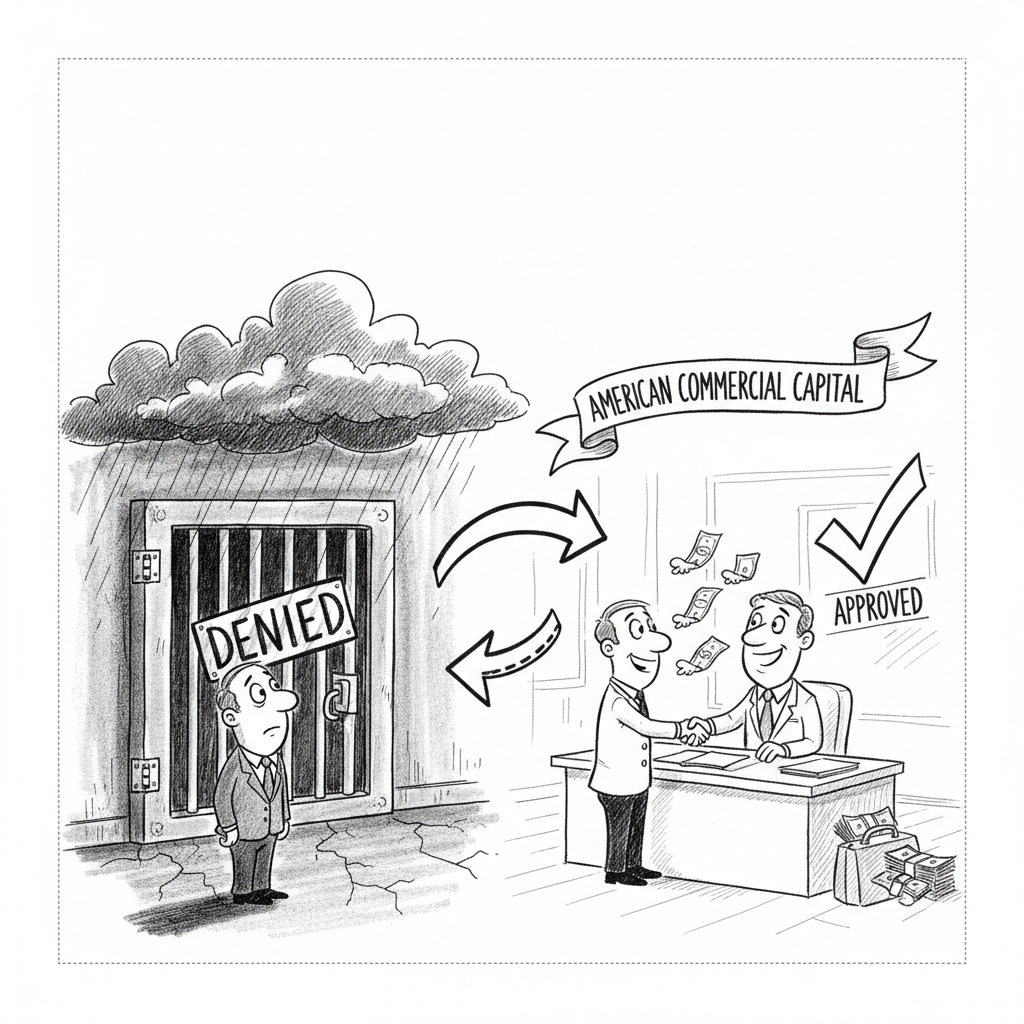
We’ll say this up front so you can relax a little: factoring doesn’t work like that. Setting up with us is closer to opening a new vendor account than applying for a loan, and most of the paperwork exists so we can get to know your business, not so we can find a reason to turn you down. This post walks you through exactly what to gather, what happens after you send it in, and how long the whole thing really takes — no surprises.
When a bank looks at a loan, it’s judging you — your credit score, your collateral, your years in business. That’s why a young or fast-growing company so often hears “no.”
Factoring flips that. We’re advancing money against invoices your customers already owe you, so the question we care most about isn’t “How strong is your balance sheet?” It’s “Are the customers you invoice good for the money?” We run our credit decision on your customers, not on you. That’s why business owners with a thin credit file, a recent rough patch, or a brand-new company can often qualify when a bank has already shown them the door. If you sell to creditworthy commercial customers and your work is genuinely complete, you’re most of the way there.
Keep that in mind as you read the checklist below — a lot of what we ask for is simply to understand who you invoice and how you run, not to grade your credit.
Here’s the actual list we’ll ask for. Don’t be intimidated by the length — most of these are documents you already have in a drawer or can pull from your accounting software in a few minutes.
That’s it. There’s no application fee, no processing fee, and no due-diligence fee for any of this — gathering and submitting these documents costs you nothing.
Here’s the sequence from “I’m curious” to “money in my account.”
1. A free consultation. You call us (or request a quote) and we talk through your business — what you do, who you invoice, and what your cash flow crunch looks like. No cost, no obligation. This is where we tell you honestly whether factoring is a fit, and if it is, roughly what your rate and advance would look like.
2. Application and documents. You send over the checklist above. If anything’s missing or unclear, we’ll tell you exactly what we need rather than leaving you guessing.
3. We vet your customers. While you keep running your business, we review the customers on your invoices to confirm they’re creditworthy. This is the part that’s doing the real work — it’s why your own credit isn’t the deciding factor.
4. We design your program and sign an agreement. Because we don’t use one-size-fits-all, cookie-cutter contracts, your advance rate, fee, and terms are built around your business — your industry, your invoice sizes, your customers, and your volume. You’ll see the terms in plain language before you sign anything, and we don’t lock you into a long-term contract.
5. Notice of assignment and the lockbox. Once you’re set up, your customers are told to send their payments to our collection lockbox instead of directly to you. This is standard for factoring, and we handle it professionally — the goal is for your customers to experience it as a routine remit-to update, not a red flag. Around the same time we make the standard UCC-1 filing that secures our position in your receivables — routine paperwork, not a mark against you.
6. Your first funding. You submit the invoices you want to factor. Once they’re approved, we advance you up to 80% of the face value, and that money can be in your hands within 24 hours.
7. Ongoing, it gets easy. From then on, factoring is a rhythm: you invoice a customer, send us the invoice, and get your advance. When your customer pays, you receive the remaining balance (the reserve) back, minus our fee. Submit, fund, repeat. If you want your books to track all of it cleanly, here’s how to record factoring transactions so the advance, the reserve, and the fee don’t get tangled up.
Two clocks are worth separating. The initial setup — from sending your documents to being fully approved and ready — depends mostly on how quickly you get the paperwork back to us and how fast we can verify your customers; when everything’s in hand, it moves quickly. After that, the clock that matters day to day is much shorter: once an invoice is approved, funding happens within 24 hours.
The single biggest thing that speeds setup along is having your two aging reports (receivables and payables) and your customer list ready to go. Those tell us almost everything we need. The most common holdup, on the other hand, is invoices for work that isn’t actually finished yet — we fund completed, delivered work, so an invoice for a job still in progress will wait until it’s done.
The honest way to find out whether factoring fits — and what your specific advance rate, fee, and timeline would be — is a quick conversation. There’s no cost and no obligation, and you’ll leave the call knowing where you stand.
Give Roy Brooks a call at 713-227-3863, or request a free quote through our site, and we’ll walk you through exactly what your business would need. If you’d like, have your receivables aging report handy — with that in front of us, we can get specific fast.


Short answer: For most small businesses with a gross margin above roughly 20%, invoice factoring pays for itself — not because the fee is small, but because the fee is a variable cost that buys sales volume. A machine shop doing $1.2 million a year at a 28% gross margin can add $600,000 in sales, absorb a 4% factoring fee, and still finish the year with roughly 80% more…
Part of our Honest Answers series — straight talk about financing a growing business.
When you start factoring, we send your customer a letter. It tells them to send your payments to us instead of to you.
We call it a first-time purchase letter. The industry calls it a Notice of Assignment. Most guys call it “that letter you send my customer,” and it’s the part they…
Honest Answers from American Commercial Capital
Most advice about starting a B2B business with no money skips the hard part. It tells you to “bootstrap,” “hustle,” and “find investors.” Two of those are useful. The third one costs you the thing you started the business to get in the first place.
Here’s the honest answer: you can start a B2B business with no money — or close…



HOW MUCH COULD FACTORING INCREASE PROFITS FOR YOUR BUSINESS?
CALL 713-227-3863