AMCOMCAP.COM BLOG
WORDS OF WISDOM FOR ENTREPRENEURS & BUSINESS OWNERS

If you’re running a young company, you already know the math problem that keeps founders up at night: you’ve landed the customer, delivered the work, sent the invoice — and now you wait 30, 60, sometimes 90 days to get paid. Meanwhile, payroll runs on Friday. Suppliers want their money. The next job needs materials.
For a lot of startups, this is where the conversation about funding starts. And one of the most common questions we hear is whether invoice factoring is actually an option for a business that’s only been around a year or two.
The short answer: yes, in most cases. But the longer answer is more useful, because it explains why factoring tends to be a better fit for startups than most other forms of financing.
Before you sign anything, it’s worth asking whether we’re the right factoring company for your startup.
Invoice factoring is the sale of your unpaid invoices to a third party — the factor — in exchange for immediate cash. You typically receive an advance of around 80% of the invoice value within a day or two. When your customer pays the invoice, the factor releases the remaining balance to you, minus a small fee.
It’s not a loan. There’s no debt added to your balance sheet, no monthly principal payment, and no fixed term you’re locked into. You’re simply getting paid sooner for work you’ve already done.
Traditional lenders evaluate you. They want to see two or three years of tax returns, strong personal credit, healthy cash reserves, and ideally some collateral. Most startups can’t check all those boxes, which is why bank loan rejections are so common in the first few years.
Factoring evaluates your customers. The factor is essentially extending credit based on the creditworthiness of the businesses that owe you money — not based on your company’s age, your personal FICO score, or whether you’ve turned a profit yet. If you’re invoicing established, credit-worthy businesses, you’re a viable candidate even if your company is six months old.
That single distinction is why factoring is one of the few legitimate funding tools available to early-stage B2B companies.
While requirements vary by factor, most startups need to meet a handful of conditions:
Your customers should be other businesses or government entities, not consumers. Factoring works on B2B and B2G invoices because those buyers have credit histories that can be evaluated. Selling directly to the public — restaurants, retail, e-commerce — generally doesn’t fit the model.
Your invoices should be for completed work or delivered goods. Factors advance against receivables that are already earned, not against future contracts or work-in-progress. If you’ve delivered and invoiced, you’re in the right zone.
Your customers should have reasonable credit. This is the piece most founders don’t expect. The factor will run credit checks on your customers, not just on you. If you’re invoicing Fortune 1000 companies, mid-sized manufacturers, hospital systems, or staffing clients with solid payment histories, you’re in good shape.
Your invoices should be free of liens. If a bank or the IRS already has a claim on your receivables, that has to be resolved before factoring can move forward. Factors will help walk you through this if it comes up.
Notice what’s not on the list: years in business, profitability, personal guarantees beyond standard underwriting, or a minimum revenue threshold. Those are bank requirements, not factoring requirements.
A few sectors lean on factoring heavily in their early years, because their cash conversion cycles are brutal and their customer bases are exactly the kind factors prefer.
Staffing agencies are probably the clearest example. You pay your placed workers weekly. Your clients pay you in 45 days. The gap is mathematically unworkable without some form of receivables financing, and factoring is purpose-built for it.
Machine shops, manufacturers, and fabricators face similar pressure. Materials are expensive and have to be paid for up front. Labor runs on a payroll cycle. But the purchase orders from your industrial customers won’t pay out for 60 days.
IT services and consulting firms with corporate clients run into the same wall once they grow beyond a handful of accounts. The bigger the customer, the longer the payment terms — and the more working capital you need to bridge.
Transportation, oil and gas services, and commercial cleaning companies round out the list of industries where factoring is essentially a standard tool, not a last resort.
Factoring fees are usually quoted as a percentage of invoice value, varying with how long the invoice takes to pay. A common structure runs between roughly 1% and 4% of the invoice, depending on volume, industry, customer credit, and average days outstanding.
That’s not free money, and founders should run the math honestly. But the right comparison isn’t “factoring vs. no cost” — it’s “factoring vs. the alternative.” If the alternative is turning down a big new contract because you can’t fund the labor and materials to fulfill it, the factoring fee usually pays for itself many times over. If the alternative is a merchant cash advance at an effective APR north of 50%, factoring looks downright cheap.
It’s worth being honest about the cases where factoring won’t help.
If your customers are consumers, this isn’t the tool. If you haven’t actually started invoicing yet, you need startup capital — equity, an SBA loan, or a credit line — not receivables financing. If your gross margins are thin enough that a 2% fee meaningfully erodes profitability, you may need to revisit pricing before adding any financing cost.
And if your business problem is really a sales problem — not enough customers, not enough invoicing — factoring won’t fix that. It accelerates cash from invoices you’ve already earned. It doesn’t generate demand.
A reasonable gut check: you have at least one or two creditworthy business customers, you’re invoicing them regularly, those invoices are net-30 or longer, and the gap between your costs going out and their payments coming in is creating real strain. If that describes your situation, factoring is worth a serious conversation.
The application process is generally fast — often a few days from inquiry to funded — and most reputable factors will give you a no-cost quote and walk through whether your specific customer mix qualifies. You don’t have to commit to anything to find out where you stand.
For a lot of startups, the realization that there’s a funding tool designed for the situation they’re in — rather than one that requires them to first not be in it — is the moment things start to move.
American Commercial Capital provides invoice factoring and asset-based lending for B2B companies across staffing, manufacturing, machine shops, IT services, and more. If you’d like to see whether your invoices qualify, request a free quote.


Short answer: For most small businesses with a gross margin above roughly 20%, invoice factoring pays for itself — not because the fee is small, but because the fee is a variable cost that buys sales volume. A machine shop doing $1.2 million a year at a 28% gross margin can add $600,000 in sales, absorb a 4% factoring fee, and still finish the year with roughly 80% more…
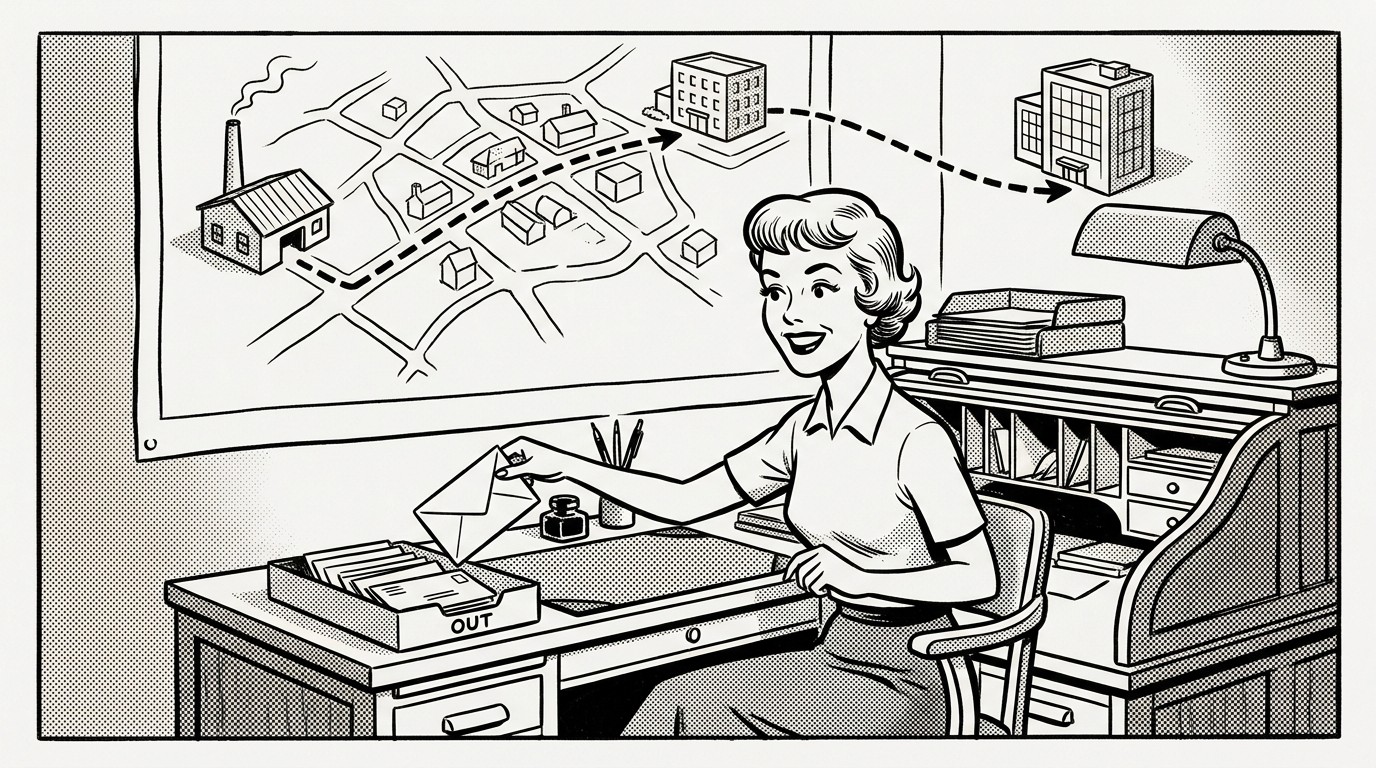
Part of our Honest Answers series — straight talk about financing a growing business.
When you start factoring, we send your customer a letter. It tells them to send your payments to us instead of to you.
We call it a first-time purchase letter. The industry calls it a Notice of Assignment. Most guys call it “that letter you send my customer,” and it’s the part they…
Honest Answers from American Commercial Capital
Most advice about starting a B2B business with no money skips the hard part. It tells you to “bootstrap,” “hustle,” and “find investors.” Two of those are useful. The third one costs you the thing you started the business to get in the first place.
Here’s the honest answer: you can start a B2B business with no money — or close…



HOW MUCH COULD FACTORING INCREASE PROFITS FOR YOUR BUSINESS?
CALL 713-227-3863