AMCOMCAP.COM BLOG
WORDS OF WISDOM FOR ENTREPRENEURS & BUSINESS OWNERS

Short answer: yes, you can — but I’m going to be straight with you. Cross-border factoring is a different animal than domestic factoring, and before you build your cash flow plan around it, you need to understand the extra layers you’re taking on.
Before you build a plan around it, it’s worth seeing what you need to apply and how onboarding works.
The core idea doesn’t change. You sell your foreign-customer invoices for cash now instead of waiting out the payment terms. And here’s the thing — international trade tends to come with some of the longest payment terms out there. So in a way, the cash flow argument for factoring gets stronger when you’re shipping overseas, not weaker. The complications are all in the execution.
Here’s what actually changes once you cross a border.
Verifying and underwriting a customer in another country is just harder than doing it on a domestic buyer. The factor has to rely on international credit information and, often, partner networks to size up a foreign buyer’s creditworthiness. The practical result: factors tend to be more conservative on international accounts, because they’re working with less visibility than they’d have on a Texas company down the road.
When an invoice is written in a foreign currency, exchange-rate swings become part of the deal. That’s one more variable somebody has to manage, and it can affect your pricing. It’s not a dealbreaker — it’s just a real factor that doesn’t exist when everything’s in dollars.
Every country has its own commercial laws, payment customs, and collection processes. Chasing a slow payer across a border is a lot more involved than chasing one domestically, and factors price that added difficulty into the arrangement. Worth knowing going in, so it’s not a surprise later.
International deals can bring shipping documents, customs records, and trade paperwork into the mix. More documentation means verification can take longer. None of it is insurmountable — but plan for a process that moves at a different pace than domestic factoring.
Add up the extra risk and complexity above and you get the honest bottom line on price: international factoring typically costs more than domestic. That’s not anybody gouging you — it’s the added work and exposure being priced in.
Here’s the encouraging part. None of this is being invented on the fly. Export factoring often runs on a two-factor model — a factor in your country partners with a correspondent factor in your customer’s country, who’s far better positioned to assess local credit and handle local collections. There are international networks built specifically to make this work. So even though the process has more moving parts, the infrastructure behind it is mature and well-established.
If you’re exporting and thinking about factoring, here’s what I’d tell you over the phone:
The answer is a qualified yes. International factoring is real, established, and genuinely useful for exporters staring down long overseas payment terms. Just go in expecting more complexity, more cost, and the need for a factor who truly knows the cross-border game.
If you’re weighing your options — domestic or international — and you want a straight conversation about whether factoring fits your situation, call me at 713-227-3863. I’ve been in this business since 1993, and I’ll tell you honestly what makes sense for you, even if the answer points you somewhere else.


Short answer: For most small businesses with a gross margin above roughly 20%, invoice factoring pays for itself — not because the fee is small, but because the fee is a variable cost that buys sales volume. A machine shop doing $1.2 million a year at a 28% gross margin can add $600,000 in sales, absorb a 4% factoring fee, and still finish the year with roughly 80% more…
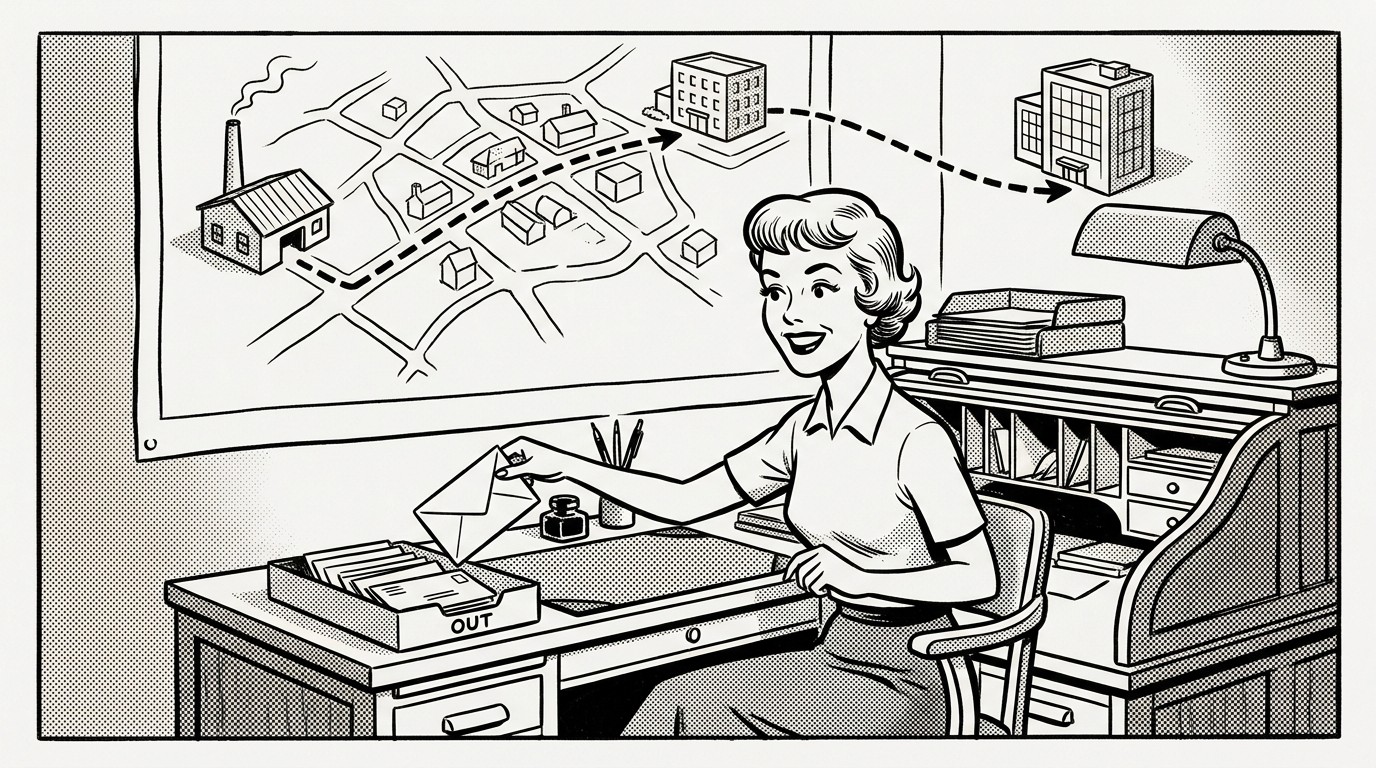
Part of our Honest Answers series — straight talk about financing a growing business.
When you start factoring, we send your customer a letter. It tells them to send your payments to us instead of to you.
We call it a first-time purchase letter. The industry calls it a Notice of Assignment. Most guys call it “that letter you send my customer,” and it’s the part they…
Honest Answers from American Commercial Capital
Most advice about starting a B2B business with no money skips the hard part. It tells you to “bootstrap,” “hustle,” and “find investors.” Two of those are useful. The third one costs you the thing you started the business to get in the first place.
Here’s the honest answer: you can start a B2B business with no money — or close…



HOW MUCH COULD FACTORING INCREASE PROFITS FOR YOUR BUSINESS?
CALL 713-227-3863