AMCOMCAP.COM BLOG
WORDS OF WISDOM FOR ENTREPRENEURS & BUSINESS OWNERS

If your business sells on terms — Net 30, Net 60, even Net 90 — you already know the math doesn’t always work in your favor. You deliver the work, send the invoice, and then wait. Meanwhile, payroll is due Friday, your supplier wants payment, and that 2% early-pay discount your vendor offered? It quietly expires while your customer’s check sits in someone’s approval queue.
This is the cash flow gap that quietly erodes profit margins in industries like manufacturing, machine shops, staffing, and IT services. Invoice factoring is one of the most direct tools for closing that gap — and when paired with smart use of vendor discounts, it can do more than smooth out cash flow. It can actually expand your bottom line.
Invoice factoring converts your unpaid receivables into immediate working capital. Instead of waiting 30, 60, or 90 days for a customer to pay, you sell the invoice to a factoring company and receive most of its value — typically an 80% advance — within a day or two. When your customer eventually pays, you receive the remaining balance, minus a small factoring fee.
The mechanics are simple, but the financial effect is significant. You’re trading a future receivable for present-day cash, and present-day cash is what pays bills, funds payroll, buys materials, and — critically — lets you take advantage of opportunities that have a clock attached to them.
Here’s where the math gets interesting. Many suppliers offer early payment discounts written as “2/10 Net 30.” Translated, that means you can take a 2% discount if you pay within 10 days, otherwise the full balance is due in 30 days.
On the surface, 2% sounds small. But consider the annualized cost of not taking that discount. By skipping a 2% discount to hold onto your cash for an extra 20 days, you’re effectively paying about 36% annualized to keep that money in your account. That’s not a rounding error — that’s a serious profit leak that compounds across every invoice you pay late.
The problem, of course, is that most businesses can’t afford to pay early. Their cash is tied up in their own unpaid receivables. So they let the discount expire, pay on day 30, and absorb the cost.
Factoring breaks this cycle. By turning your receivables into cash you can deploy immediately, it puts you in position to capture supplier discounts that, in aggregate, often exceed the cost of the factoring itself.
Say you run a machine shop and just delivered a $50,000 job to a customer on Net 60 terms. You also have a $30,000 invoice coming due from your steel supplier, who offers 2/10 Net 30. You’re inside the 10-day window, but cash is tight.
Without factoring: you pay your supplier on day 30 at full price. You wait 60 days for your customer’s payment. The 2% discount — $600 — is gone.
With factoring: you advance 80% of your $50,000 invoice, which puts $40,000 in your account within a day or two. You pay the supplier early and capture the $600 discount. When your customer pays, you receive the remaining 20% minus the factoring fee — typically 2-3% of the invoice value, depending on terms and timing.
The factoring fee and the discount captured don’t always net out to a positive in a single transaction, but that’s the wrong frame. Spread across every invoice you pay and every receivable you factor, the cumulative effect is meaningful — and it’s amplified by everything else the cash unlocks: making payroll without stress, buying materials in larger lots, taking on bigger jobs without worrying whether you can fund them.
Vendor discounts are the cleanest example, but they’re not the only way faster cash flow shows up on the income statement.
Predictable working capital lets you negotiate better terms with suppliers in general — not just early-pay discounts, but volume pricing, preferred customer status, and faster shipping. It lets you say yes to a job that requires upfront material purchases. It removes the operational drag of constantly chasing payments and juggling which bills get paid this week. And for growing businesses, it means you can scale at the pace your sales pipeline allows, rather than the pace your collections department dictates.
Factoring works best for businesses that sell B2B on terms, have creditworthy customers, and operate in industries with predictable invoice volumes. It’s particularly well-suited to manufacturing, staffing, IT services, distribution, and similar sectors where the gap between delivering work and getting paid is the central cash flow challenge.
It’s not the right fit for every situation, and the economics depend on your margins, your vendor terms, and the structure of your factoring arrangement. A good factoring partner will walk you through the numbers honestly and help you understand whether the trade-off works for your business.
Invoice factoring is often described as a cash flow tool, which undersells what it actually does. At its best, it’s a profit tool — one that lets you stop leaving money on the table in the form of missed discounts, missed opportunities, and the steady operational cost of running a business that’s always waiting to get paid.
If you’re regularly skipping vendor discounts because the cash isn’t there, that’s a sign worth paying attention to. The discounts you’re walking away from may be costing you more than the financing that would let you capture them.
American Commercial Capital, LLC provides invoice factoring solutions to businesses across manufacturing, machine shops, staffing, IT, and related industries. To discuss whether factoring fits your business, get in touch.


Short answer: For most small businesses with a gross margin above roughly 20%, invoice factoring pays for itself — not because the fee is small, but because the fee is a variable cost that buys sales volume. A machine shop doing $1.2 million a year at a 28% gross margin can add $600,000 in sales, absorb a 4% factoring fee, and still finish the year with roughly 80% more…
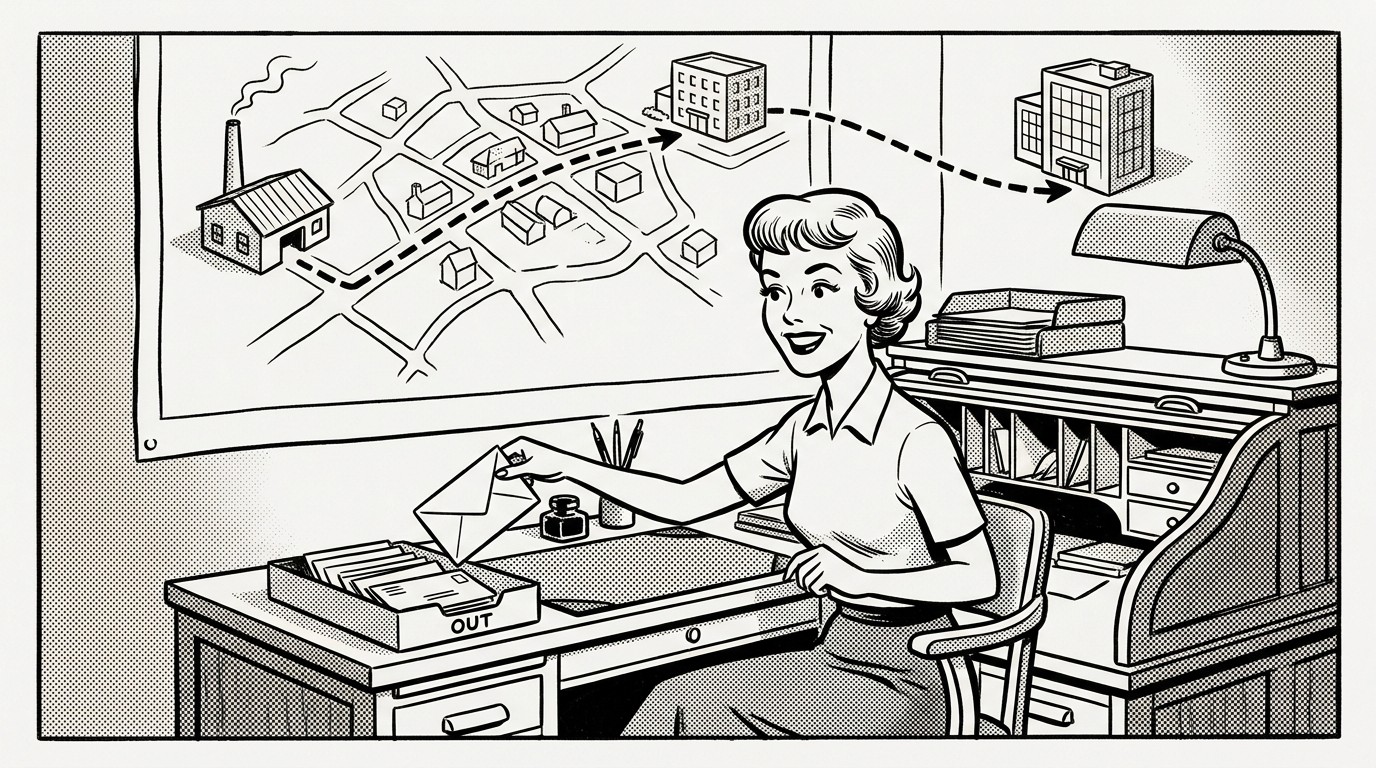
Part of our Honest Answers series — straight talk about financing a growing business.
When you start factoring, we send your customer a letter. It tells them to send your payments to us instead of to you.
We call it a first-time purchase letter. The industry calls it a Notice of Assignment. Most guys call it “that letter you send my customer,” and it’s the part they…
Honest Answers from American Commercial Capital
Most advice about starting a B2B business with no money skips the hard part. It tells you to “bootstrap,” “hustle,” and “find investors.” Two of those are useful. The third one costs you the thing you started the business to get in the first place.
Here’s the honest answer: you can start a B2B business with no money — or close…



HOW MUCH COULD FACTORING INCREASE PROFITS FOR YOUR BUSINESS?
CALL 713-227-3863