AMCOMCAP.COM BLOG
WORDS OF WISDOM FOR ENTREPRENEURS & BUSINESS OWNERS

Cash flow gets the cautionary tales. Every owner who has scrambled to make payroll learns to respect liquidity, and they are right to. But beneath the cash flow conversation sits a deeper question—one that determines whether a business is worth running at all: is it actually making money?
Profit is the engine. Cash flow is the fuel line. You can keep a clean, well-managed fuel line delivering steadily to an engine that produces nothing, and the business will idle its way to a quiet death. Liquidity buys time. Profit is what you do with it. A company can collect every invoice on schedule, hold a healthy reserve, and still be slowly going broke if the work it does is not profitable. Understanding why margin matters, and how to defend it, is what separates businesses that build lasting value from those that merely keep moving.
The first thing to clarify is what profit actually is, because it is easy to confuse with the cash sitting in the account. Cash flow is the movement of dollars in and out of the business. Profit is what remains after every real cost is honestly accounted for—labor, materials, overhead, depreciation, the owner’s time, the cost of the capital itself.
The two can diverge dramatically, and the divergence is dangerous because cash is reassuring and profit is not. A business can be flush with cash because it just took a large deposit, drew on a line of credit, or sold off receivables—none of which means a dollar of profit was earned. Conversely, a genuinely profitable business can look cash-poor in a growth phase, plowing earnings back into inventory and staff. Cash in the bank tells you whether you can pay tomorrow’s bills. Profit tells you whether the business deserves to exist next year. Mistaking the first for the second is how owners keep running operations that quietly consume their own value.
Businesses with real, durable margins operate from a position of strength that compounds over time.
They fund their own growth. Profit is the only source of cash a business generates by itself rather than borrowing, raising, or pulling forward. A profitable company expands on retained earnings; an unprofitable one expands on someone else’s money, on increasingly unfavorable terms, until the music stops. Self-financed growth is slower to start and impossible to stop.
They earn the right to be patient. Margin is what lets a business say no—to the bad client, the underpriced contract, the deal that books revenue but loses money on every unit. Companies with healthy profit can walk away. Companies without it take whatever keeps the lights on, and the worst deals are usually the ones taken out of desperation.
They attract capital and talent. Lenders, investors, and the best employees are all drawn to businesses that demonstrably make money. Profitability lowers the cost of everything—debt is cheaper, equity is less dilutive, recruiting is easier—because every counterparty can see the business is built to last.
They survive their own mistakes. Every company misjudges a market, botches a hire, or eats a bad quarter. A profitable business absorbs the hit and moves on. A break-even business treats every error as potentially fatal, because it is. Margin is the room a business gives itself to be wrong and recover.
The flip side is just as important, and easier to ignore because thin margins can look like success for a long time. Revenue grows, the team expands, the business feels busy—right up until the structural problem surfaces.
Companies running on slim profit have no room for error. A modest cost increase, a price war, a single soft season can erase the entire margin and tip the operation into loss. They chase volume to compensate, taking on more work at the same thin spread, which adds complexity and risk without adding much to the bottom line. They confuse motion for progress: more clients, more shipments, more hours, all of it generating activity and very little actual earnings.
Most insidiously, low-margin businesses lose the ability to improve. There is nothing left over to reinvest in better equipment, better systems, or better people, so they stay stuck doing the same work the same way while better-capitalized competitors pull ahead. The business becomes a treadmill—running hard, going nowhere, fragile to the first real shock. It is possible to be remarkably busy and remarkably unprofitable at the same time, and that combination is more common, and more dangerous, than empty calendars ever were.
The good news is that profit, like cash flow, can be engineered. It is not purely a function of how much a business sells, but of how disciplined it is about what it sells, at what price, and at what true cost.
Pricing discipline is usually the highest-leverage move. Many businesses underprice out of habit or fear of losing the bid, never realizing how much margin they surrender on every transaction. A small, defensible price increase often drops almost entirely to the bottom line, because the costs were already being covered. Knowing your real costs—fully loaded, not the comforting back-of-envelope version—is what makes that pricing possible, and it routinely reveals products, services, or customers that have been quietly losing money for years. Shedding those is not a retreat; it is a margin improvement disguised as a smaller business.
Operational efficiency protects profit from the other direction, squeezing waste, rework, and idle capacity out of the cost base. And cash management still has its place here—not as a substitute for profit, but as a way to capture more of it. For industries where extended payment terms are standard—manufacturing, staffing, freight, professional services—invoice factoring converts receivables into immediate working capital, letting a profitable business take on more profitable work without its margin being eroded by the wait. The fee is worth paying when it unlocks earnings the business would otherwise have had to turn down; it is a poor trade only when the underlying work was never profitable to begin with. Liquidity tools are most powerful in the hands of a company that already knows its numbers.
There is something unglamorous about prioritizing profit over growth. It means turning down revenue, raising prices customers grumble about, and firing the impressive-looking accounts that turn out to lose money. It does not produce the breathless expansion stories that get celebrated in business media. It is the equivalent of eating vegetables and getting enough sleep—boring, fundamental, and absolutely essential.
But the businesses that last, that compound value over decades, that survive the cycles and emerge stronger, are almost without exception the ones that respect margin. Revenue is vanity, cash flow is survival, but profit is the point. It is the only number that proves the work was worth doing, the only engine that generates cash year after year without being borrowed or sold, and the surest foundation a business can stand on while it decides what to build next.
In the end, every business is in the business of converting work into money worth keeping. The companies that do this with discipline—pricing honestly, costing rigorously, and refusing to mistake activity for earnings—are the ones that get to keep playing the game, and to play it on their own terms.


Short answer: For most small businesses with a gross margin above roughly 20%, invoice factoring pays for itself — not because the fee is small, but because the fee is a variable cost that buys sales volume. A machine shop doing $1.2 million a year at a 28% gross margin can add $600,000 in sales, absorb a 4% factoring fee, and still finish the year with roughly 80% more…
Part of our Honest Answers series — straight talk about financing a growing business.
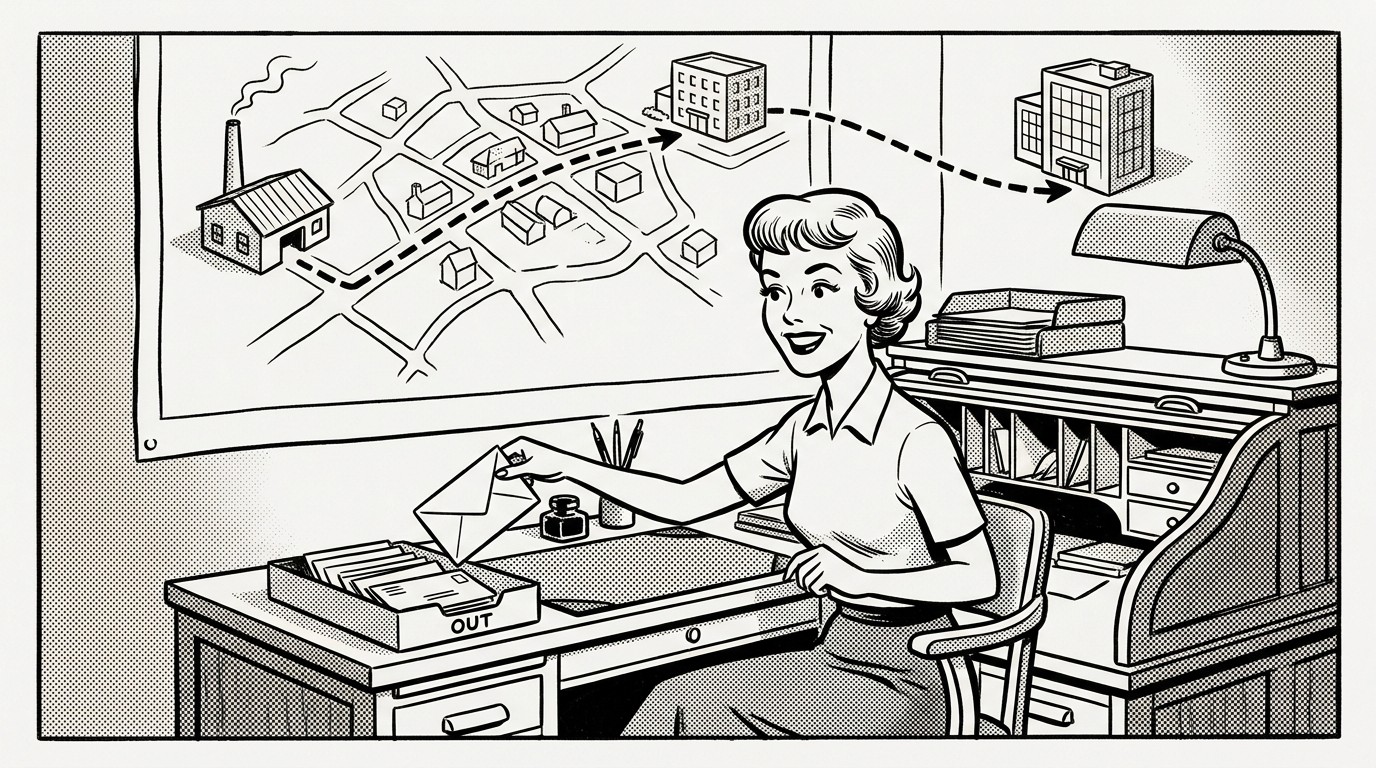
When you start factoring, we send your customer a letter. It tells them to send your payments to us instead of to you.
We call it a first-time purchase letter. The industry calls it a Notice of Assignment. Most guys call it “that letter you send my customer,” and it’s the part they…
Honest Answers from American Commercial Capital
Most advice about starting a B2B business with no money skips the hard part. It tells you to “bootstrap,” “hustle,” and “find investors.” Two of those are useful. The third one costs you the thing you started the business to get in the first place.
Here’s the honest answer: you can start a B2B business with no money — or close…



HOW MUCH COULD FACTORING INCREASE PROFITS FOR YOUR BUSINESS?
CALL 713-227-3863