A Few Quick Tips for Getting Paid Faster!

Many businesses miss the basics of keeping the cash flowing. This can be incredibly tough on small businesses, which often depend on timely payments from clients to pay the bills and grow. The following are just a few strategies that will help you collect on invoices faster and more effectively.
1. Invoice Your Customer Promptly and Accurately!
- Send out an invoice the day you deliver your product or complete your service. Our clients that are really good hand deliver their invoices whenever possible.
- Make sure that your invoice is accurate and complete. Make sure that your invoice complies with any payment instructions provided at the time you were given the order. Make sure the invoices reflects any corresponding purchase order number and the authorizing individual’s contact information.
- If you can send the invoice via facsimile or email, do it! But always confirm that it was received internally by the correct responsible party. This is best accomplished with a “quality assurance” style phone call that confirms that the invoice was received and that it meets the customer’s standards.
- Highlight the amount, due date, and remittance address. If you really want to take to the next level, provide electronic bank transfer information on your invoice!
2. Follow Up!
- The day after delivering an invoice, always follow up to confirm that it was, in fact, received by the appropriate person. This can be done in the form of a “quality assurance” conversation. Tell the customer that you are calling to simply check that invoice is, in fact, accurate and meets the standards of their payment terms. You can also use this as an opportunity to find out if any additional approval is necessary. It is also a great opportunity to build relationships with those responsible for payment.
- Based on the findings from the initial “quality assurance” conversation, follow up, approximately 14 days before you expect payment. The purpose of this call is to find out if the invoice has been approved for payment. If it has not, due to a shortage or quality issue, this will be your opportunity to fill the order completely or correct any quality issues. Again, the tone of this conversation is one of quality assurance.
- If the customer does not pay on the date expected, always follow up! But remember, at this point you need them to do something for you! Sugar always goes further than spice.
3. Do Some Credit Research Up Front!
- When dealing with large orders, always ask for trade and/or bank references up front. Asking for credit references is a normal business exercise. Don’t be afraid to ask!
- If you use a factoring service, they will always have credit reporting services to assist you with your credit decisions. This is just one of the many added benefits of working with a factoring company to smooth out your collection efforts.
4. Provide Customers with Detailed Monthly Statements
- Most modern accounting systems are capable of producing detailed monthly statements that list all outstanding invoices and amounts owed. Use this feature!
- Sending out monthly billing statements is one of the most cost effective collection tools a business can utilize.

READ MORE FROM AMERICAN COMMERCIAL CAPITAL
What’s a UCC-1 Filing, and Why Does My Factor Need One?
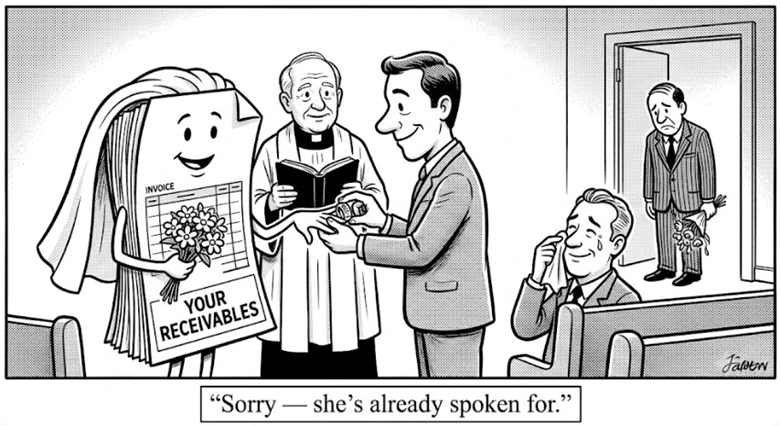
Part of our Honest Answers series — straight talk about financing a growing business.
Somewhere in the factoring agreement, usually right about where you’re feeling good about the deal, you’ll hit a line that says the factor will file a UCC-1 against your business. And for a lot of owners, that’s the moment the stomach tightens. A lien? Against me? I thought I was the one getting paid…
How to Record Factoring Transactions and Keep Your Books Accurate
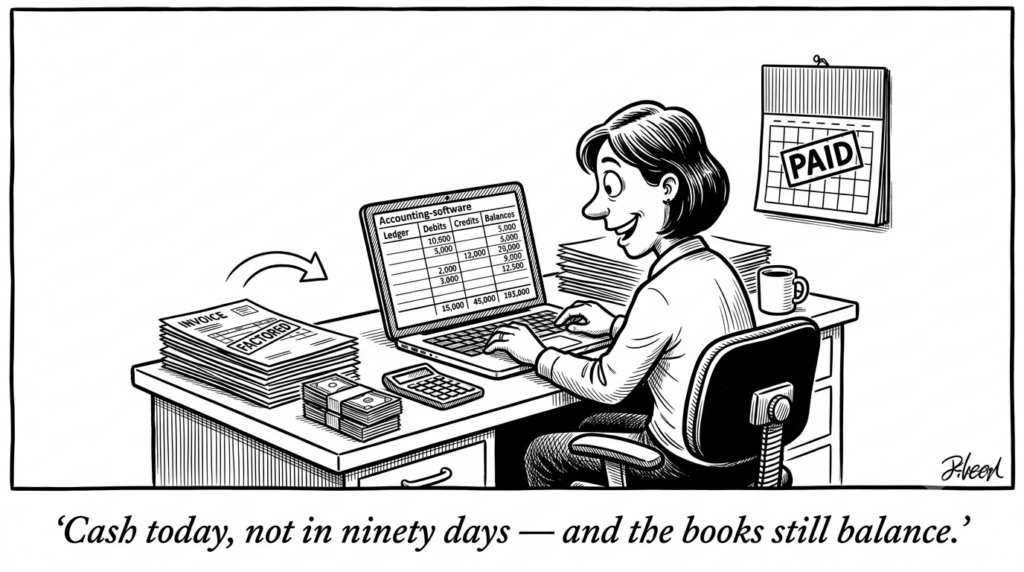
To record factoring transactions accurately, your books need to handle four things a standard accounts-receivable workflow was never built for: the factor’s advance, the withheld reserve, the fee, and the release of that reserve when your customer pays. This guide shows you how to record factoring transactions using three dedicated general-ledger accounts and four simple journal entries — and how to choose between the gross and net-of-discount methods of presenting…
Recourse vs. Non-Recourse Factoring: What’s the Difference, and Which One Is Right for You?
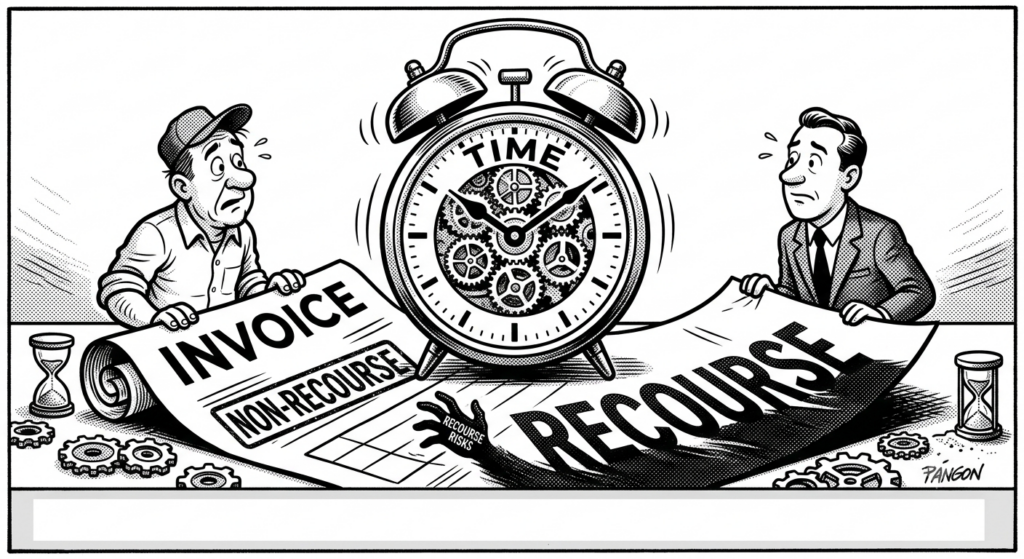
When business owners start looking into invoice factoring, two words come up fast: recourse and non-recourse. They sound like fine print, and plenty of owners nod along without really knowing which one they’re signing up for. But this is one of the most important choices in any factoring agreement, because it decides who eats the loss if your customer doesn’t pay. After decades of financing small businesses, I…