AMCOMCAP.COM BLOG
WORDS OF WISDOM FOR ENTREPRENEURS & BUSINESS OWNERS


Navigating the realm of small business management is a dynamic journey that requires a mix of skills and strategies. It takes some trial and error to figure out what works best for your business and goals, so you’re likely to be tweaking things along the way. And that’s perfectly OK. Whether you’re stepping into the role or seeking to refine your approach, these twenty tips will guide you toward becoming a more adept and successful manager.
Imagine a daily routine as your personal GPS for productivity. Over time, it becomes ingrained, seamlessly guiding you through each day’s demands. Keep in mind the age-old adage, “Practice makes perfect.”
Incorporate a daily to-do list into your routine, whether on paper or digitally. The act of jotting down tasks matters most. Interestingly, manually updating it enhances memory retention. But don’t settle for mere modifications—rewrite the entire list to supercharge its impact.
Think of fill-in-the-blank forms as something that draws from your routines and lists. As you fine-tune your daily grind, you’ll encounter recurring tasks that demand consistent communication. Pre-made fill-in-the-blank forms serve as your trusty assistants for clear instructions, whether they’re intended for employees, vendors, or customers.
Open, transparent communication is the cornerstone of successful management. Regularly connecting with your team, sharing goals, and offering constructive feedback fosters a collaborative environment where everyone’s insights are valued.
A positive work environment fuels productivity and job satisfaction. Foster teamwork, celebrate achievements, and address conflicts proactively. A contented team is an engaged and motivated team.
Shouldering all your day-to-day business tasks alone is a recipe for exhaustion. Delegating responsibilities empowers your team while enabling you to focus on strategic decisions. Trusting your team members and nurturing their growth is paramount.
In the ever-changing business landscape, adaptability is your secret weapon. Embrace flexibility and be prepared to pivot your strategies or even your business model. Adapting keeps you ahead of the curve.
Efficiently managing your time is crucial to prevent burnout. Prioritize tasks, set realistic goals and deadlines, and maintain a healthy work-life balance. You might not think you need time to relax and recharge, but you do. A well-structured day enhances both your productivity and mental well-being. Recommended book: 15 Secrets Successful People Know About Time Management.
Your team takes cues from you. Showcase qualities you value, such as punctuality, dedication, integrity, and a strong work ethic. Your actions set the tone for a motivated, ethical team.
Regular feedback, focusing on strengths and areas for improvement, fosters growth and alignment with the company’s goals. Constructive criticism helps everyone learn and evolve.
Leverage data to inform your decisions. Analyze sales trends, customer feedback, and other insights to make well-informed choices for better outcomes.
Conflict is natural, but handling it effectively is an art. Address disagreements calmly, mediate when necessary, and encourage open conversations to find solutions that benefit all parties. Recommended book: Conflict Resolution Playbook.
Show appreciation by acknowledging hard work through regular recognition and rewards. Boosting morale encourages sustained dedication to achieving business goals.
Foster a culture of innovation. Encourage your team to share creative ideas and solutions. Embracing innovation keeps your business fresh and ahead of the competition.
Understanding and managing your emotions, as well as those of your team, is crucial for effective leadership. Emotional intelligence fosters better communication and rapport. Recommended book: Emotional Intelligence: Why It Can Matter More Than IQ.
Ensure that your team understands their roles and responsibilities. Clearly define expectations and provide the necessary resources for success.
Support your team’s growth by offering opportunities for training, skill-building, and advancement. Invest in their development to create a motivated and skilled workforce.
Value and embrace diversity in your team. A diverse workforce brings a variety of perspectives that can lead to creative solutions and a richer work environment.
Commit to lifelong learning. Engage in workshops, stay attuned to industry trends, and delve into relevant literature, documentaries, and podcasts. It’s also important to keep learning about new things outside of your industry that may have little or nothing to do with your business. Embracing new knowledge keeps you agile and well-prepared to make informed decisions.
Running a small business comes with ups and downs. Develop resilience to navigate setbacks and challenges with a positive attitude. Learning from adversity strengthens your leadership.
With these twenty tips in your arsenal, you should be well-equipped to elevate your management skills and improve your relationship with the team. Remember, growth is a continuous journey that requires commitment, adaptability, and empathy. Implement these strategies, adapt as needed, and watch your management prowess thrive.

Part of our Honest Answers series — straight talk about financing a growing business.
When you start factoring, we send your customer a letter. It tells them to send your payments to us instead of to you.
We call it a first-time purchase letter. The industry calls it a Notice of Assignment. Most guys call it “that letter you send my customer,” and it’s the part they…

Honest Answers from American Commercial Capital
Most advice about starting a B2B business with no money skips the hard part. It tells you to “bootstrap,” “hustle,” and “find investors.” Two of those are useful. The third one costs you the thing you started the business to get in the first place.
Here’s the honest answer: you can start a B2B business with no money — or close…
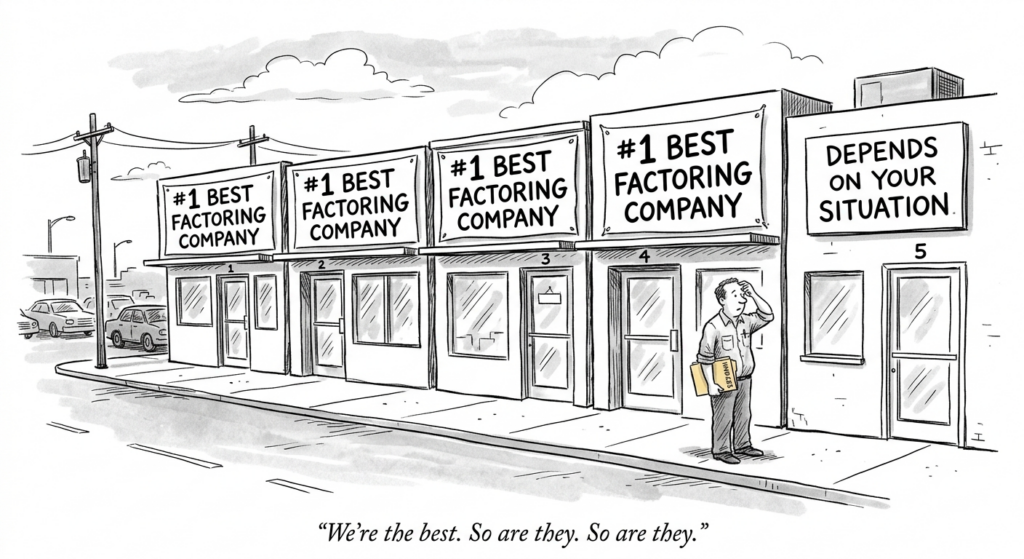
Short answer: There is no single best factoring company in Houston. There is a best factoring company for your business, and which one it is depends on your invoice size, your industry, your customers’ credit, how much hand-holding you need, and how much you’re willing to pay for speed. This article gives you the criteria to figure that out — including the questions that will get you an honest…



HOW MUCH COULD FACTORING INCREASE PROFITS FOR YOUR BUSINESS?
CALL 713-227-3863