The Underrated Power of Available Cash Flow
Profit gets the headlines. Revenue growth gets the press releases. But ask any business owner who has watched a thriving company
stumble into insolvency, and they will tell you the same thing:
cash flow is what keeps the lights on.
Available cash flow—the money a business can actually access and
deploy at any given moment—is the lifeblood of operations. It is also one of the most misunderstood metrics in business. A company can be profitable on paper and still run out of money. It can have millions in receivables and still miss payroll. Understanding why available cash matters, and how to protect it, separates businesses that endure from those that merely exist.
Cash Flow Is Not Profit
The first thing to clarify is what available cash flow actually means. Profit is an accounting concept—revenue minus expenses over a given period. Cash flow is the movement of actual dollars in and out of the business. Available cash flow is what remains after fixed obligations are met and what can be drawn upon to fund the next opportunity, the next emergency, or the next month of operations.
A business that invoices a client on net-60 terms has earned revenue, but it has not received cash. Until that payment lands, the work performed is essentially a loan extended to the customer. The business still has to pay its workers, its suppliers, its rent, and its taxes in the meantime. This is where the disconnect between profit and liquidity quietly destroys otherwise healthy companies.
The Strategic Advantages of Liquidity
Businesses with strong available cash flow operate from a position of strength in ways that compound over time.
They can negotiate better terms with suppliers. A vendor would rather sell to a customer who pays quickly than one who drags out invoices, and they will often offer discounts—typically two to five percent—for early payment. Over a year, those discounts add up to meaningful margin improvement.
They can seize opportunities others cannot. When a competitor falters, when a piece of equipment goes on sale, when a key hire becomes available, the business with cash on hand acts while others arrange financing. Speed itself becomes a competitive advantage.
They can weather disruption. Recessions, supply chain shocks, sudden loss of a major client—these events expose which businesses were truly stable and which were merely riding favorable conditions. Cash reserves are what convert a crisis into an inconvenience.
They sleep better at night. This sounds soft, but it has hard consequences. Owners and executives making decisions under financial duress tend to make worse decisions. They take bad clients, accept unfavorable contracts, and cut corners that come back to haunt them. Liquidity restores judgment.
The Hidden Costs of Cash Constraints
The flip side is just as important. When available cash runs thin, businesses make compromises that quietly erode their long-term position.
They delay paying suppliers, damaging relationships that took years to build. They postpone maintenance and reinvestment, creating future problems larger than the savings. They take on expensive short-term debt at unfavorable terms because they have no alternative. They turn down work because they cannot afford to staff up for it, watching growth opportunities pass to better-capitalized competitors.
Most insidiously, cash-constrained businesses become reactive. Strategy gives way to survival. Long-term planning becomes a luxury they cannot afford. The business stops being run and starts being managed, day by day, invoice by invoice.
Building and Protecting Cash Flow
The good news is that available cash flow can be engineered. It is not purely a function of how much a business earns, but of how that money moves through the operation.
Tightening collections is usually the highest-leverage move. Many businesses tolerate slow-paying customers out of habit or fear of friction. Clear payment terms, consistent follow-up, and incentives for early payment routinely accelerate cash inflows by weeks. For industries where extended payment terms are standard—manufacturing, staffing, freight, professional services—invoice factoring offers a way to
convert receivables into immediate working capital, trading a small fee for the ability to fund growth without waiting on customer payment cycles.
Managing inventory and work-in-progress carefully prevents cash from being trapped in unsold goods or half-finished projects. Stretching payables thoughtfully, without burning supplier relationships, keeps more cash in the business longer. Building a cash reserve—ideally three to six months of operating expenses—creates the buffer that lets a business behave strategically rather than defensively.
The Quiet Virtue
There is something unglamorous about prioritizing cash flow. It does not produce the dramatic growth stories that get celebrated in business media. It does not impress investors looking for hockey-stick revenue charts. It is the equivalent of eating vegetables and getting enough sleep—boring, fundamental, and absolutely essential.
But the businesses that last, that compound value over decades, that survive the cycles and emerge stronger, are almost without exception the ones that respect cash. They understand that revenue is vanity, profit is sanity, but cash is reality. Available cash flow is what gives a business the freedom to grow on its own terms, to make decisions for the long run, and to remain the master of its own future.
In the end, every business is in the business of converting work into money. The companies that do this efficiently, consistently, and with discipline are the ones that get to keep playing the game.
Related Reading

Roy Brooks and American Commercial Capital, LLC, has provided invoice-factoring services to Houston-area small businesses since 2003. We work with businesses in San Antonio, Dallas, Austin, Fort Worth, Beaumont, Port Arthur, Corpus Christi, and other nearby Texas cities.
If you want to learn more about how cashflow-sensitive invoice factoring can help your business, give us a call at 713-227-3863, contact us here, or fill out our form for a free, no-obligation quote.
READ MORE FROM AMERICAN COMMERCIAL CAPITAL

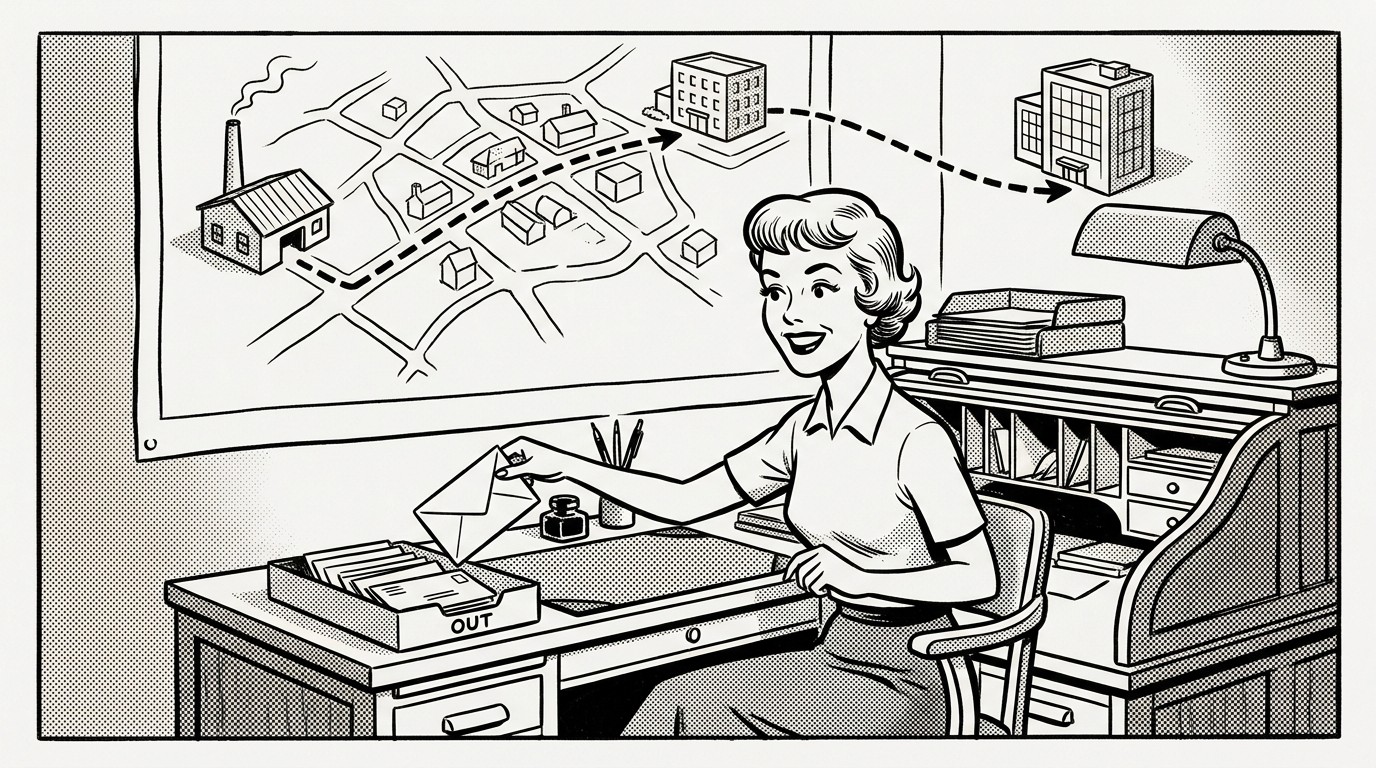
Short answer: For most small businesses with a gross margin above roughly 20%, invoice factoring pays for itself — not because the fee is small, but because the fee is a variable cost that buys sales volume. A machine shop doing $1.2 million a year at a 28% gross margin can add $600,000 in sales, absorb a 4% factoring fee, and still finish the year with roughly 80% more…
Roy
Brooks
2.09.2026
Part of our Honest Answers series — straight talk about financing a growing business.
When you start factoring, we send your customer a letter. It tells them to send your payments to us instead of to you.
We call it a first-time purchase letter. The industry calls it a Notice of Assignment. Most guys call it “that letter you send my customer,” and it’s the part they…
Roy
Brooks
17.08.2026
Honest Answers from American Commercial Capital
Most advice about starting a B2B business with no money skips the hard part. It tells you to “bootstrap,” “hustle,” and “find investors.” Two of those are useful. The third one costs you the thing you started the business to get in the first place.
Here’s the honest answer: you can start a B2B business with no money — or close…
Roy
Brooks
5.08.2026
Back