AMCOMCAP.COM BLOG
WORDS OF WISDOM FOR ENTREPRENEURS & BUSINESS OWNERS

I’ve spent more than thirty years watching small businesses either make it or fold. Here’s the pattern almost nobody warns you about: the company that fails usually isn’t the one losing money. It’s the one that ran out of cash while the books still showed a profit.
There’s an old line in finance — profit is an opinion, cash is a fact. Profit depends on accounting choices: when you book revenue, how you spread out expenses, what you capitalize. Cash is what’s actually in the account on the Friday payroll clears. You can be profitable on paper and still miss payroll. I’ve watched it happen more times than I can count, and it almost always surprises the owner, because they were looking at the wrong number.
If you’re running a young company — especially a B2B business that invoices other companies and waits to get paid — these are the cash flow ideas I wish more owners understood before they hit the wall.
Big companies obsess over this one. Startups almost never calculate it. Your cash conversion cycle is simply how many days pass between the moment you spend a dollar and the moment that dollar comes back to you as collected cash.
For a service or staffing business, most of it comes down to two things: how long your customers take to pay you, minus how long your suppliers let you wait to pay them.
Say you run a staffing firm. You pay your people every Friday, but your client pays your invoice in 45 days. That means for a month and a half, you are financing your customer’s operation out of your own pocket. That gap is your cash conversion cycle, and it’s the single most important number nobody put on your dashboard.
Once you can see it, you can shrink it — by invoicing faster, tightening terms, or negotiating more time from your own vendors. But you can’t manage a number you’ve never measured.
This is the one that catches good businesses off guard. We’re all trained to think growth is the goal and the reward. But growth consumes cash, at least in the near term — and the faster you grow, the more it consumes.
Think about what happens when you land a contract twice the size of your usual job. You pay for the labor and materials now. You collect 30, 45, sometimes 60 days later. Double the sales, double the gap. I’ve seen companies fail in the months right after their best sales stretch ever, because nobody warned them that a big win creates a big hole before it creates a big check.
If you’re scaling, plan for the cash the growth will eat before you celebrate the revenue it will eventually produce. Growth isn’t free. It’s financed — and if you don’t finance it deliberately, it finances itself out of your bank balance.
When a company gets into trouble and brings in a turnaround specialist, one of the first tools that expert reaches for is a rolling 13-week cash flow forecast. Not an annual budget. A week-by-week map of cash coming in and cash going out, thirteen weeks ahead, updated every single week.
You don’t need to be in trouble to use it. Honestly, it’s more valuable when you’re not. It’s a simple spreadsheet: every expected deposit by week, every payroll, every vendor bill, rent, taxes, loan payments. When you lay it out weekly, the danger weeks jump off the page — the week a big vendor bill lands on the same Friday as payroll, before your customer’s check arrives.
That’s the whole point. A yearly budget hides the timing problems. A weekly forecast shows you the squeeze three, four, five weeks out — while you still have time to do something about it. Build it, and update it every Friday. It’s the cheapest financial insurance you’ll ever buy.
Most young companies take whatever terms the customer hands them. Net-30, net-45, “we pay on the 25th of the following month” — whatever the client’s accounts payable department prefers. You don’t have to accept that as gospel.
Terms are something you can design:
None of this is complicated. It’s just the difference between accepting your cash flow and engineering it.
Here’s a risk that hides in plain sight. If one client is 40% of your revenue and they quietly stretch from net-30 to net-60, that’s not a slow payment. That’s an existential event. Your biggest customer is also your biggest cash flow risk, and the two facts rarely get discussed in the same conversation.
I’m not saying fire your best client. I’m saying know your exposure. If losing or slow-paying any single customer would jeopardize payroll, that’s a concentration problem to manage — by diversifying your book over time, and by keeping enough of a buffer that one client’s cash flow habits can’t take you down.
“We keep some money in savings” is not a plan. Give the buffer a real target — say, eight weeks of operating expenses sitting in a separate account you treat as off-limits. Pick the number that lets you sleep, then defend it.
The buffer isn’t dead money. It’s what lets you say no to a bad-terms deal, survive a slow-paying customer, and take on growth without panicking. Every business owner who’s been through a genuinely lean stretch comes out the other side religious about this. You’d rather learn it on purpose than the hard way.
Most of what I’ve written here is about timing — the gap between doing the work and getting paid. For a lot of B2B companies, that gap is the whole problem. You’re profitable, you’re growing, and you’re still short, purely because your cash is tied up in unpaid invoices.
That’s the exact gap invoice factoring is built to close: instead of waiting 30, 45, or 60 days, you get most of the invoice amount within a day or two of billing, and the factor waits to get paid instead of you. It’s not the right answer for every business, and I’ll always tell you straight when it isn’t. But if slow-paying customers are the thing standing between you and steady operations — or between you and the next stage of growth — it’s a tool worth understanding. If you want the arithmetic instead of the argument, I put the before-and-after income statements side by side — including what the fee actually does to net profit.
The bigger point is this: cash flow health isn’t luck, and it isn’t the same thing as profit. It’s a handful of numbers you can actually watch and a handful of levers you can actually pull. The owners who make it are the ones who learn which is which — ideally before the account runs dry.
Roy Brooks is the founder and president of American Commercial Capital, LLC, a Houston-based invoice factoring company that has helped small B2B businesses across Texas turn unpaid invoices into working cash since 2003.
When you’re ready to see real numbers on your own invoices, you can request a free quote and we’ll take it from there.


Short answer: For most small businesses with a gross margin above roughly 20%, invoice factoring pays for itself — not because the fee is small, but because the fee is a variable cost that buys sales volume. A machine shop doing $1.2 million a year at a 28% gross margin can add $600,000 in sales, absorb a 4% factoring fee, and still finish the year with roughly 80% more…
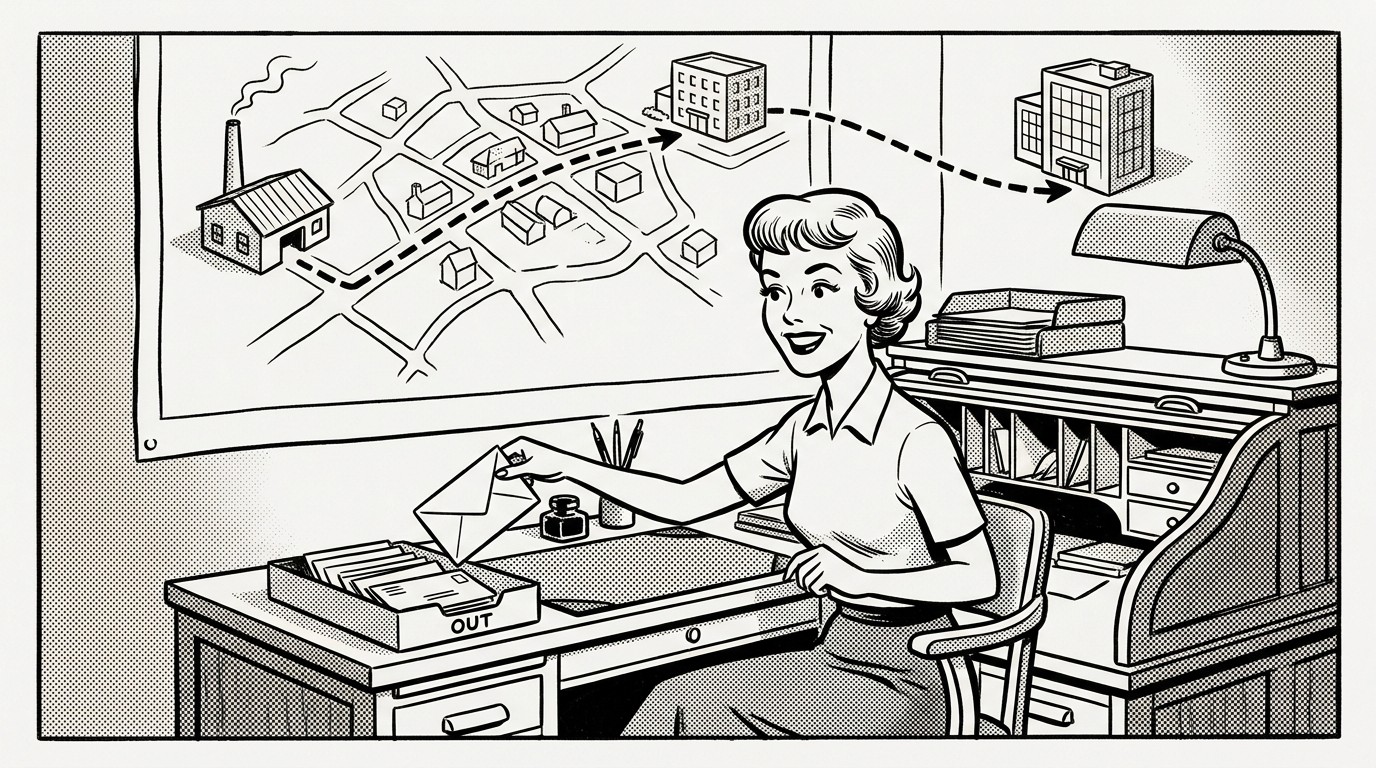
Part of our Honest Answers series — straight talk about financing a growing business.
When you start factoring, we send your customer a letter. It tells them to send your payments to us instead of to you.
We call it a first-time purchase letter. The industry calls it a Notice of Assignment. Most guys call it “that letter you send my customer,” and it’s the part they…
Honest Answers from American Commercial Capital
Most advice about starting a B2B business with no money skips the hard part. It tells you to “bootstrap,” “hustle,” and “find investors.” Two of those are useful. The third one costs you the thing you started the business to get in the first place.
Here’s the honest answer: you can start a B2B business with no money — or close…



HOW MUCH COULD FACTORING INCREASE PROFITS FOR YOUR BUSINESS?
CALL 713-227-3863