AMCOMCAP.COM BLOG
WORDS OF WISDOM FOR ENTREPRENEURS & BUSINESS OWNERS

Part of our Honest Answers series — straight talk about financing a growing business.
This question comes up early in almost every conversation, and it usually arrives with a little suspicion attached. People have heard that once you sign with a factor, everything you bill runs through them forever. That’s not quite right, but it’s not entirely wrong either — and the difference matters enough that you should understand it before you sign anything.
Here’s the honest answer: you get to pick your customers. You generally don’t get to pick individual invoices within a customer. That one sentence explains most of what confuses people about this.
When an owner asks “can I pick and choose,” they’re usually asking two different things at once:
They’re separate issues. Let’s take them one at a time.
Most factors — us included — work on a customer-by-customer basis. You decide which of your customers to bring into the facility. If you want to factor your slow-paying national account and keep your two local customers who pay in ten days, that’s a perfectly normal arrangement. In fact, it’s a smart one. There’s no reason to pay a discount rate on an invoice that’s going to be paid before the ink dries.
Once a customer does pay, the process is simple on your end — here’s what happens after the invoice is paid.
But once a customer is in, all invoices to that customer typically run through the factor. That surprises people, so let me explain the reasoning, because it isn’t arbitrary.
When you factor a customer’s invoices, we send that customer a notice of assignment — a formal letter telling them to remit payment to us instead of to you. Their accounts payable department updates your remittance information in their system. That’s a switch, not a dial. Their AP clerk is not going to sit there deciding, invoice by invoice, which payments go to you and which go to us. If you factor invoice #1041 but not #1042, one of two things happens: their system gets confused and pays the wrong party, or your customer starts wondering what exactly is going on over at your shop.
Neither one is good for you. Clean payment routing protects your relationship with your customer, and it protects the factor’s position on the receivable. So the standard is: customer in, customer out. Not invoice by invoice.
Spot factoring — funding a single invoice, one time, with no ongoing relationship — does exist. Some companies advertise it heavily. If you have one big invoice, one cash crunch, and no expectation of needing help again, it can solve the problem.
But be clear-eyed about the tradeoff. A factor’s cost to bring on a new client is basically the same whether you factor one invoice or a hundred: we underwrite your business, run credit on your customer, file a UCC-1, paper the agreement, and set up the account. Spread that work across one invoice and the pricing has to reflect it. Spot rates run meaningfully higher than ongoing facility rates, and the deal is often slower to close than a client of ours submitting their fifth invoice on a Tuesday morning.
So spot factoring is a tool, not a bargain. If cash flow pressure is going to be a recurring feature of your business — and for most growing B2B companies it is — an ongoing relationship at a lower rate is the better economics, even if you only submit invoices some months.
Here’s where I’d tell you to read the contract carefully, no matter who you’re talking to.
A lot of factoring agreements carry a monthly minimum — either a minimum volume you’re expected to factor, or, more commonly, a minimum monthly fee. It works like a gym membership. You commit to factoring, say, $100,000 a month. If you only factor $40,000, you still pay fees as though you’d factored the full amount. Have a slow quarter, and you’re paying for money you never received.
There’s usually a term commitment underneath it too: one year, two years, sometimes three, often with automatic renewal unless you give written notice in a specific window. Miss the window, and you’re on the hook for another year of minimums.
None of that is illegal or even unusual. It’s how a lot of the industry prices its business, particularly the larger national shops that need predictable revenue per account. But it does mean the rate you were quoted isn’t the rate you’ll actually pay if your volume swings. And it means “can I pick and choose” has a hidden answer: sure, pick and choose — you’ll just be paying for the invoices you didn’t factor.
Whoever you’re talking to, get straight answers on these four, in writing:
If a factor gets vague on any of these, that vagueness is the answer.
We built our facility around the way small businesses actually operate, which is to say unevenly. You choose which customers to factor. You factor when you need to and sit tight when you don’t. If you have a strong month and don’t need the cash, that’s a good month — it shouldn’t cost you anything.
Being selective is not a loophole you’re sneaking past us. It’s how factoring is supposed to work. You’re selling an asset you already own, at a price you agreed to, when it makes sense for you to sell it. Any arrangement that punishes you for not needing money has stopped being a cash flow tool and started being something else.
If you want to talk through which of your customers make sense to factor and which ones don’t, call me at 713-227-3863 or request a free quote. I’ll give you a straight answer, even if the answer is that you don’t need us right now.
— Roy Brooks, President, American Commercial Capital, LLC


Short answer: For most small businesses with a gross margin above roughly 20%, invoice factoring pays for itself — not because the fee is small, but because the fee is a variable cost that buys sales volume. A machine shop doing $1.2 million a year at a 28% gross margin can add $600,000 in sales, absorb a 4% factoring fee, and still finish the year with roughly 80% more…
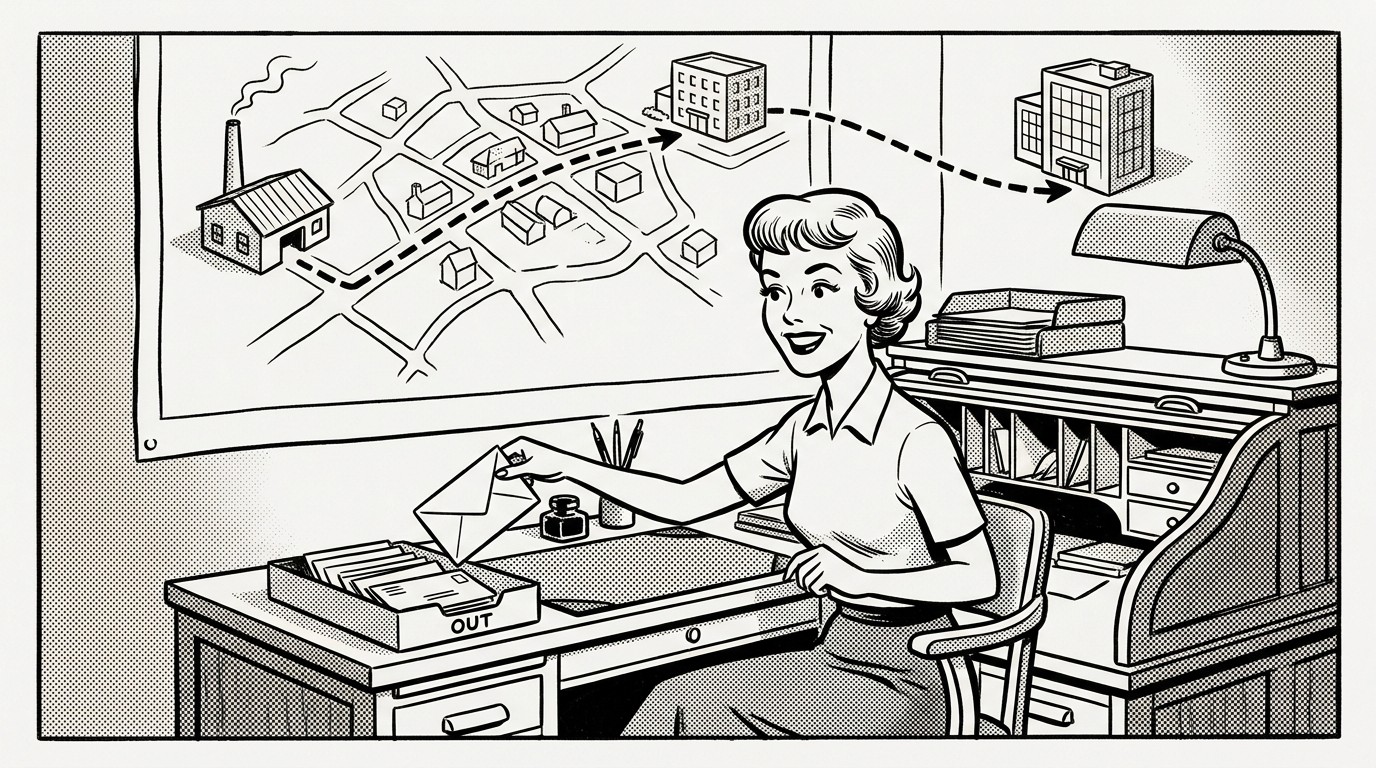
Part of our Honest Answers series — straight talk about financing a growing business.
When you start factoring, we send your customer a letter. It tells them to send your payments to us instead of to you.
We call it a first-time purchase letter. The industry calls it a Notice of Assignment. Most guys call it “that letter you send my customer,” and it’s the part they…
Honest Answers from American Commercial Capital
Most advice about starting a B2B business with no money skips the hard part. It tells you to “bootstrap,” “hustle,” and “find investors.” Two of those are useful. The third one costs you the thing you started the business to get in the first place.
Here’s the honest answer: you can start a B2B business with no money — or close…



HOW MUCH COULD FACTORING INCREASE PROFITS FOR YOUR BUSINESS?
CALL 713-227-3863