AMCOMCAP.COM BLOG
WORDS OF WISDOM FOR ENTREPRENEURS & BUSINESS OWNERS

Part of our Honest Answers series — straight talk about financing a growing business.
You did everything right. You landed the bigger customer, won the contract, or saw demand climb faster than you expected. So you went to the bank for a line of credit or a term loan to fund the growth — and the bank said no.
It stings, and it doesn’t always make sense. Your business is growing. Sales are up. You have real customers placing real orders. Why would a lender turn that down?
Here’s the honest answer: a bank decline usually says more about how banks are built than about whether your business is fundable. And it does not mean your expansion has to stop. For a lot of small B2B companies in Texas, the very order the bank wouldn’t finance is exactly the kind of growth invoice factoring is designed to fund.
Banks aren’t in the business of betting on your future. They’re in the business of protecting depositors’ money, which means they lend against your past — audited financials, years of profitability, hard collateral, and a debt-to-income picture that already looks stable. When you’re growing quickly or you’re still young, your past doesn’t yet look the way a bank underwriter needs it to look.
The most common reasons a solid company gets declined:
None of these are character judgments. They’re structural. A bank can look at a healthy company with a great new contract and still have to say no — because the loan doesn’t fit the mold, not because the business isn’t good.
If your company is new enough that you never had a bank relationship to begin with, start here instead: how to build a B2B business without outside money.
This is the part most owners feel but can’t quite name: growth is a cash-flow problem before it’s a profit problem.
Say you land a new customer that doubles your volume. Congratulations — and now you have to cover payroll, materials, fuel, or subcontractors this week to deliver work you won’t get paid for in 30, 45, or 60 days. The bigger the win, the bigger the gap. That gap is where good companies stall out, and it’s exactly the gap a bank loan is slow and inflexible at filling.
Invoice factoring flips the underwriting question. Instead of asking “How strong is your balance sheet and your history?” a factor asks “How creditworthy are the customers you invoice?” You sell your outstanding B2B invoices to the factor and receive most of the value upfront — often within a day of invoicing — instead of waiting out your customer’s payment terms.
The practical difference is enormous:
The businesses we work with across Texas all hit the same wall from different directions:
In every case, the trigger is the same: a real growth opportunity the bank wouldn’t finance, funded instead by the receivables that opportunity creates.
It helps to see the two side by side:
Factoring isn’t free — you’re paying a fee for speed, flexibility, and the removal of your biggest constraint. The honest way to weigh it: what is the growth worth, and what does it cost you to not take it? For most owners staring at an order they can’t fund, the math is clear.
First, don’t take it as a verdict on your business. A turndown is a mismatch between your situation and one lender’s specific model — nothing more.
Then take stock of what you actually have. If you’re a B2B company invoicing creditworthy customers on terms, you’re holding the exact asset a factor funds against. The receivables sitting in your aging report are working capital you haven’t unlocked yet.
A conversation with a factor is a very different experience than a loan application. There’s no lengthy underwriting on your personal history. The questions are about who you sell to, what your terms are, and where you’re trying to grow. Many companies are set up and funding within days.
American Commercial Capital has been factoring invoices for Texas businesses since 2003, with roots in the industry going back to 1993. We work with small and mid-sized B2B companies — staffing agencies, manufacturers and machine shops, IT firms, construction and service contractors, and trucking companies — across the Houston area and throughout Texas. We’re not a call center; when you call, you talk to the people who make the decisions.
If a bank recently declined the financing you needed to grow, that decision doesn’t have to be the end of the conversation. It may just mean you were talking to the wrong kind of lender for where your business is right now.
Have receivables and a growth opportunity you can’t fund? Let’s talk about whether factoring fits. Call American Commercial Capital at 713-227-3863 or request a free, no-obligation quote at amcomcap.com.


Short answer: For most small businesses with a gross margin above roughly 20%, invoice factoring pays for itself — not because the fee is small, but because the fee is a variable cost that buys sales volume. A machine shop doing $1.2 million a year at a 28% gross margin can add $600,000 in sales, absorb a 4% factoring fee, and still finish the year with roughly 80% more…
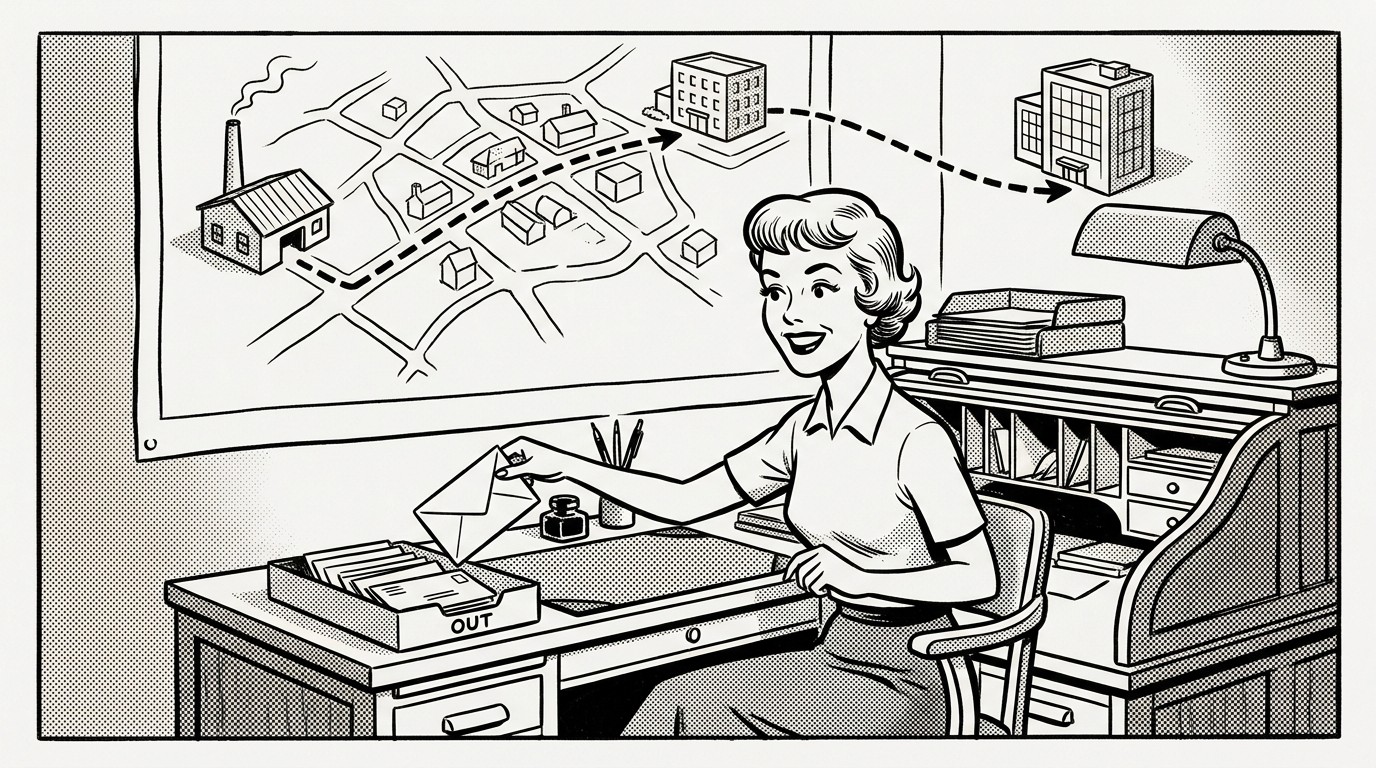
Part of our Honest Answers series — straight talk about financing a growing business.
When you start factoring, we send your customer a letter. It tells them to send your payments to us instead of to you.
We call it a first-time purchase letter. The industry calls it a Notice of Assignment. Most guys call it “that letter you send my customer,” and it’s the part they…
Honest Answers from American Commercial Capital
Most advice about starting a B2B business with no money skips the hard part. It tells you to “bootstrap,” “hustle,” and “find investors.” Two of those are useful. The third one costs you the thing you started the business to get in the first place.
Here’s the honest answer: you can start a B2B business with no money — or close…



HOW MUCH COULD FACTORING INCREASE PROFITS FOR YOUR BUSINESS?
CALL 713-227-3863